
Sergei Rachmaninoff's estimated net worth at the time of his death in 1943 was somewhere north of $700,000 in contemporary dollars, which translates to roughly $12 million to $15 million in today's money depending on the inflation method you use. Some net worth sites push that figure as high as $46 million, while others land around $2 million adjusted for inflation. The honest answer is that it's a range, not a precise number, and the spread exists because nobody has a complete balance sheet from 1943. What we do have is enough documentary evidence to make a well-reasoned estimate, and that's exactly what this article walks through.
Rachmaninoff Net Worth Estimate: Sergei’s Wealth Explained

Marcus Holloway
5 Jun 2026
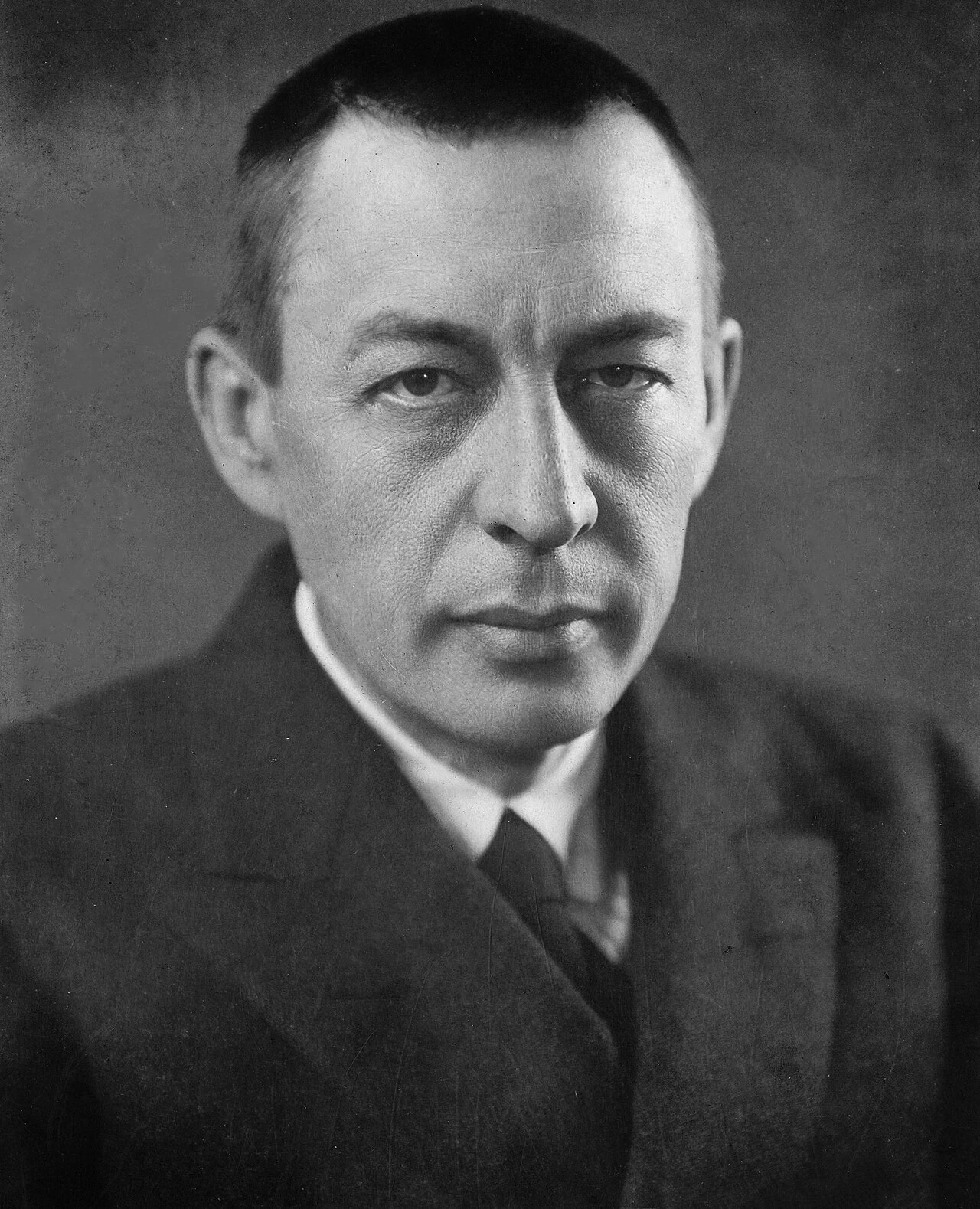
Which Rachmaninoff are we talking about?
When people search for "Rachmaninoff net worth," they almost universally mean Sergei Vasilyevich Rachmaninoff (April 1, 1873 to March 28, 1943), the Russian-born composer and virtuoso pianist. He's the most prominent historical figure bearing the surname, and his work spans some of the most performed piano concertos, symphonies, and solo piano pieces in the classical repertoire. There's no living celebrity or finance-world figure named Rachmaninoff dominating search results, so the query points squarely at Sergei. For context, this site also covers wealth profiles for figures like Howard Rachofsky and others in adjacent financial territory, but Rachmaninoff sits in a different category entirely: a historical artist whose finances have to be reconstructed from academic records, archival materials, and inflation modeling rather than current SEC filings or Forbes estimates. The site also explains how wealth estimates work for people like Howard Rachofsky, including how to interpret ranges such as net worth figures. If you are specifically searching for Howard Rachofsky net worth, this article’s methods and ranges would need to be applied to a different, living-wealth style case rather than a 1943 historical estate reconstruction.
The estimated net worth today: a transparent range
The most academically grounded anchor comes from historian Robin Sue Gehl's 2008 dissertation, "Reassessing a Legacy: Rachmaninoff in America, 1918–1943," which places his net worth at death at somewhere north of $700,000 in 1943 dollars. That single figure is probably the most credible baseline we have because it draws on documented concert schedules, income records, and tax data rather than guesswork.
Adjusting $700,000 from 1943 to 2026 dollars using the CPI inflation calculator puts the figure in the range of $12 million to $15 million. Using GDP deflator methods or purchasing-power-parity adjustments can push that higher, which likely explains the $46 million figure some sites cite. The $2 million inflation-adjusted figure you'll see on certain net worth pages appears to use a conservative adjustment or a different base-year starting point. All of these are plausible depending on methodology, which is exactly why the range matters more than any single headline number.
| Source / Method | Estimated Net Worth (2026 USD) | Notes |
|---|---|---|
| Gehl dissertation (1943 base) + CPI | $12M – $15M | Most academically grounded; uses documented income/tax records |
| GDP deflator / purchasing power method | $20M – $46M | Higher multiplier; used by some net worth aggregator sites |
| Conservative inflation adjustment | ~$2M | Likely uses a narrow base or partial income estimate |
| Mid-range working estimate | $12M – $20M | Best practical range for general reference purposes |
For general reference, a working estimate of $12 million to $20 million in today's money is the most defensible range. Treat anything at the extreme ends of published figures with appropriate skepticism unless the source explains its methodology in detail.
Where the money actually came from

Rachmaninoff's income had several distinct streams across his career, and their relative weight shifted dramatically after 1918. Understanding each stream is essential to understanding the net worth estimate.
Concert touring: the dominant engine
After emigrating to the United States, Rachmaninoff essentially reinvented himself as a touring concert pianist. Gehl's research frames this transformation explicitly as a "practical, financial necessity." He gave 992 documented U.S. concerts from 1918 until his death in 1943, with North American touring as the center of gravity from late 1918 onward. His 1924/25 season alone has been studied in detail by Cambridge-published researchers as a window into how extensive and systematically organized this touring activity was. Concert fees for a performer of his stature in the 1920s and 1930s were substantial, and with nearly a thousand documented performances, this was by far the largest single contributor to his accumulated wealth.
Recordings: Edison, Ampico, and RCA Victor

Recording income started almost immediately after his arrival in the U.S. His poor financial situation in 1919 prompted him to sign with Edison Records for a limited contract covering ten released sides on Edison's Diamond Disc format. He also recorded 35 piano rolls for the American Piano Company (Ampico) between 1919 and 1929, including 12 rolls of his own compositions. These weren't trivial side projects; they were additional income streams layered on top of touring, and they also generated ongoing royalty-style payments as rolls and discs sold over time. Rachmaninoff was notably selective about his recorded output, requiring approval rights over any commercial releases, which limited volume but likely protected the commercial value of what he did release.
Composing and publishing rights
Before emigrating, Rachmaninoff earned income from commissions, publishing deals, and the performance fees other artists paid to play his works. After leaving Russia, much of his composing slowed considerably, particularly in the early American years when he was focused on rebuilding his performance career. His publishing rights represented long-tail income, but the pre-1918 catalog existed in a complicated legal and royalty environment given the Russian Revolution and the eventual transfer of rights. In practice, composing income was secondary to performance income in the post-emigration period.
Posthumous royalties
Rachmaninoff died in 1943, and his estate continued to collect royalties on recordings and published scores after his death. However, for the purposes of estimating his personal net worth at death, posthumous royalties are only relevant as an indicator of the ongoing value of his catalog, not as income he personally accumulated. His estate's value would have reflected the projected future value of those rights.
The financial turning points: emigration, estates, and spending
Rachmaninoff's financial life broke cleanly into two eras: pre-1918 Russia and post-1918 America. The Russian Revolution ended his life in Moscow essentially overnight. He and his family left Russia permanently and arrived in New York in 1918 with whatever assets they could carry or transfer. Pre-revolutionary Russian wealth, tied to land, currency, and social position, was largely wiped out. This is why the pre-emigration period contributes almost nothing to the 1943 net worth estimate.
The most significant capital outlay of his later years was Villa Senar, an estate he built near Hertenstein, Switzerland. He purchased the plot in 1932 and had the villa constructed as a summer retreat. According to Rachmaninoff Foundation records, by the time he stopped using it in 1939, he had spent as much on annual maintenance costs as he originally spent on the entire construction project. That's a meaningful drain on wealth over a seven-year period. He left Senar for the last time on August 16, 1939, as war broke out in Europe, and the asset effectively became inaccessible and illiquid.
In the U.S., he eventually purchased a home in Beverly Hills in June 1940, at 610 North Elm Drive. Owning property in Beverly Hills in 1940 was not a casual expenditure, reflecting both his financial success and his ongoing cost structure. Running two major properties (even sequentially) while supporting a household and family in exile created constant spending pressure against his touring income.
How this estimate is actually built: methodology and assumptions
Estimating the net worth of a historical figure who died in 1943 is fundamentally different from estimating a living celebrity's wealth. There's no probate record publicly available, no Forbes profile, and no SEC filing. For example, living artists like Lenny Kravitz often have ongoing wealth reporting and estimates such as those highlighted by Forbes. What researchers and analysts can work with includes concert documentation (programs, contracts where preserved), tax records (Gehl's dissertation references average net income of $5,249 in 1925 and average income tax of $176 in that year, drawn from period-specific data), recording contracts, property records, and archival materials.
The Library of Congress holds a Rachmaninoff archive compiled largely by his sister-in-law and biographer Sophie Satin, covering the period from 1917 through his death in 1943. It contains extensive documentation of his professional and personal life. However, the finding aid makes clear this is not a complete financial record: there's no single balance sheet or probate inventory in the public domain. Researchers piece together income proxies from concert schedules, known fee structures for the era, recording royalty norms, and property transaction evidence.
The inflation adjustment step introduces its own uncertainty. Converting 1943 dollars to 2026 dollars can yield meaningfully different results depending on whether you use CPI, GDP deflator, or wage-based purchasing power adjustments. A $700,000 base figure becomes roughly $12M to $15M using CPI, but can reach $30M to $46M with other methods. Neither is wrong per se; they measure different things. CPI measures the cost of a basket of goods; the GDP deflator measures economic output more broadly. For a practical reader, the CPI-based estimate is the most conservative and the most commonly used, which is why the $12M to $15M range is the best starting point.
- Base figure from Gehl (2008 dissertation): $700,000+ at death in 1943
- CPI adjustment (1943 to 2026): approximately 15x to 21x multiplier
- GDP deflator adjustment: can push multiplier to 40x or higher
- Data gaps: no complete probate record, limited private financial correspondence
- Key income proxies: concert documentation, recording contracts, property records
- Primary archive: Library of Congress Rachmaninoff collection (Sophie Satin compilation)
How Rachmaninoff compares to his peers and what shifts the estimate
Rachmaninoff was wealthy by any reasonable historical standard for a classical musician, but context matters. Among performer-composers of the late 19th and early 20th century, those who successfully built touring careers in North America consistently accumulated far more than those who remained dependent on European patronage or composing commissions alone. Anton Rubinstein, for example, is documented as having made enough from American touring to secure his finances for the rest of his life, illustrating that North American concert touring was genuinely the high-margin path for performers of this caliber. Rachmaninoff essentially followed the same model but did so over 25 years rather than a single tour.
Compared to composers who relied primarily on patronage or publishing without a performance career of his scale, like many of his contemporaries in Europe, Rachmaninoff's wealth was substantially higher. The dual income from composing (pre-1918) and performing (post-1918) combined with recording contracts put him in a materially better position than most classical figures of his era at death.
The factors that most affect where his estimate lands within or outside the $12M to $20M range are: the inflation methodology chosen, how much value you assign to the Villa Senar estate (illiquid and stranded in Europe by 1939), whether posthumous royalty streams are capitalized into the death-date estimate, and how much of his touring income is assumed to have been saved versus spent on property and living costs. Adjust any of those variables and the range shifts noticeably, which is why transparency about assumptions matters more than any single published number.
What to do if you want to dig deeper
If you're trying to verify or refine this estimate for your own research, the most productive paths are: the Library of Congress Rachmaninoff archive finding aid (available as a PDF from the LoC website), Robin Sue Gehl's 2008 dissertation accessible through OhioLINK's ETD database, and the Villa Senar Foundation's published materials on construction and maintenance costs. For concert documentation, the Cambridge Core article analyzing Rachmaninoff's 1924/25 season programs is one of the more rigorous published sources on his touring activity. If you find a net worth site citing a figure outside the $12M to $46M range without explaining its inflation methodology, treat it with caution. The honest answer for a historical figure like Rachmaninoff is always a range with disclosed assumptions, not a single precise number.
FAQ
Why is the “rachmaninoff net worth” number so inconsistent across websites?
Because most sites are not measuring the same thing. Some inflate a “cash-like” death-year baseline, others also capitalize future value of catalog royalties, and others effectively treat the estimate as “wealth equivalent” rather than “assets at death,” which can swing results by tens of millions depending on the assumptions.
What does “net worth” mean for a person who died in 1943, since there is no public probate inventory?
In this context it is an inferred balance at death, meaning researchers estimate assets by combining income documentation (fees, recording contracts), documented spending (properties and long-term costs), and then translating those savings into an inflation-adjusted present-day equivalent. Without a surviving balance sheet, it is necessarily model-based.
How much of the rachmaninoff net worth estimate should I treat as tied to recordings and sheet music after his death?
Only indirectly. Posthumous royalties are more appropriate for valuing the catalog as an estate asset at death, not as money he personally accumulated by 1943. If a site counts later earnings as if they were his death-date wealth, the figure can be overstated relative to a conservative methodology.
Do inflation choices change only the final number, or do they also change what part of the estimate you trust?
Both. CPI tends to produce a more conservative translation of 1943 purchasing power, while GDP deflator or wage-based approaches can inflate “wealth equivalent” more aggressively. If a site does not clearly state which method it used, you should discount the implied precision.
Which should matter more for the range, the Villa Senar cost or the uncertainty about touring savings?
Often both, but Villa Senar is a concrete spending anchor while “saved versus spent” is harder to reconstruct. If a site assumes higher savings rates from touring income than is supported by the known household and property cost pressure, the net worth estimate will drift upward.
Could the mansion and property purchases (like Beverly Hills) increase net worth beyond what touring cash alone would suggest?
Yes, but only if those purchases were affordable from accumulated savings and later assets are valued correctly. Property in that era is not a liquid cash substitute, and valuation can be distorted if a site treats illiquid assets as if they were easily realizable at full value at death.
Are $12 million to $20 million “today’s money” the same as an investment portfolio value?
No. Those figures are purchasing-power or wealth-equivalent translations, not a statement that Rachmaninoff would have had a modern diversified portfolio. His holdings likely included property and rights that do not map cleanly to modern financial accounts.
If a website quotes a very high figure (for example, in the $40M+ range), what specific red flag should I look for?
Look for whether it explains the inflation method and whether it is capitalizing future catalog value into a death-date net worth. A high number without a transparent methodology, or without showing how posthumous income is treated, is a key reason to be skeptical.
What is a practical way to sanity-check any rachmaninoff net worth claim?
Check whether the figure is consistent with (1) a single baseline death-year estimate around the documented $700,000 north-of figure, (2) an explicit inflation approach, and (3) reasoned treatment of Villa Senar and ongoing property costs. If any one of these is missing, the claim is likely based on broad speculation rather than documented constraints.
If I want to research this myself, which documents most directly affect the estimate?
Those that constrain income and major expenditures. In practice that means concert documentation and fee-relevant records for touring, recording contract details for the timing and extent of recording income, and Villa Senar construction and maintenance evidence for the biggest later-life capital drain.