
As of May 2026, no independently verified, Forbes-style net worth figure exists in the public record for Howard Rachofsky or Cindy Rachofsky. Based on what is publicly documented, a Richard Meier-designed Dallas mansion, a private art space called The Warehouse, a named family foundation, and decades of high-profile philanthropy and collecting, a reasonable informed estimate for Howard Rachofsky's net worth falls somewhere in the range of $200 million to $500 million, with the combined household figure likely in the same general band. That range is an inference built from asset context and public activity, not a confirmed number. Here is exactly what the evidence supports, where the gaps are, and how you can check the numbers yourself.
Howard and Cindy Rachofsky Net Worth: Updated Estimates

Marcus Holloway
19 May 2026
Who Howard and Cindy Rachofsky are, and why people ask about their wealth
Howard Rachofsky is a Dallas-based investor and art collector who built his early wealth through a career in hedge fund management and finance before pivoting to become one of the most recognized figures in the American contemporary art world. Cindy Rachofsky is his partner in both collecting and philanthropy, holding formal roles including Trustee at amfAR (the Foundation for AIDS Research). Together they are probably best known for hosting the TWO x TWO for AIDS and Art fundraiser at their home, an annual event that has raised tens of millions of dollars over its run.
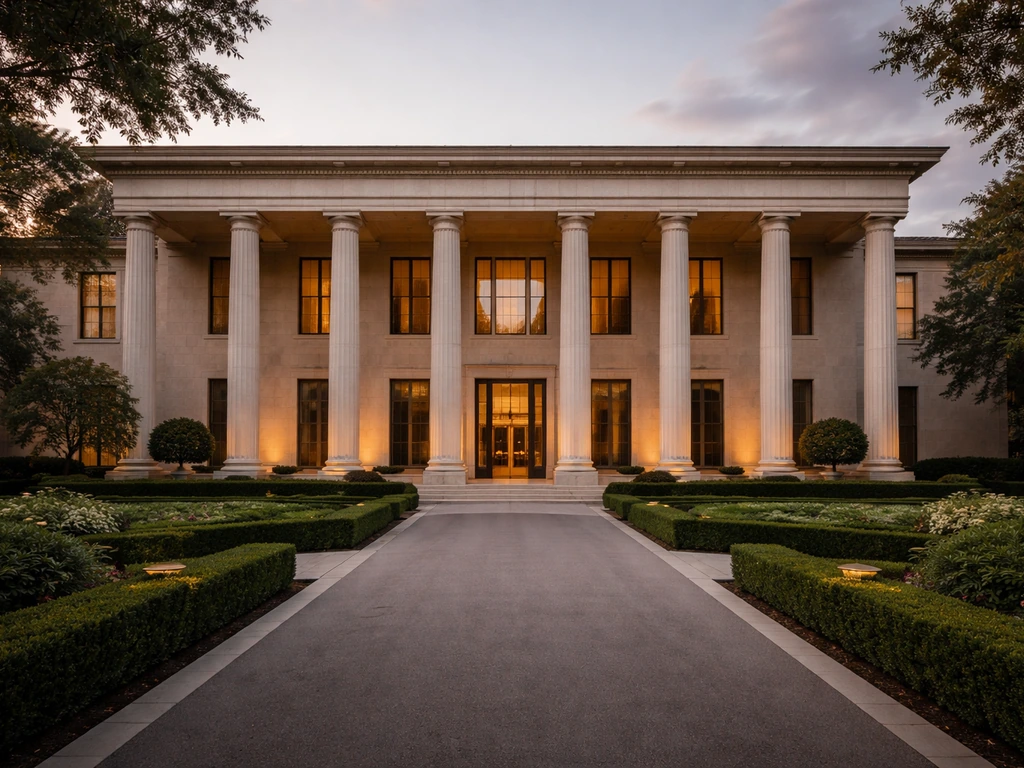
Their home is not just a residence, it is an architectural landmark. Designed by Richard Meier and known publicly as the Rachofsky House, it has served as an exhibition and event space and sits at the center of Dallas's contemporary art scene. They also operate The Warehouse, a separate private art space in Dallas that functions as a semi-public gallery. Howard Earl Rachofsky is listed as President of the Howard E. Rachofsky Foundation, with Cindy B. Rachofsky serving as a Director, per IRS filings accessible through ProPublica. That combination of finance background, significant real estate, a named foundation, and a high-profile philanthropic profile is exactly what drives curiosity about their net worth.
Howard Rachofsky's net worth: the best available estimate
Howard's wealth originates from his hedge fund and finance career. Profiles, including a 2011 D Magazine piece tracing his path from selling soda to collecting blue-chip art, confirm a finance-to-collecting arc that is common among self-made ultra-high-net-worth collectors. The specific fund names, AUM figures, and equity stakes he holds are not publicly documented at the detail level needed to build a bottom-up model.
Working from what is available: the Rachofsky House alone, as an architecturally significant Meier-designed mansion in a prime Dallas market, likely carries an assessed or market value in the range of $10 million to $30 million or more. Wallpaper covered the home in March 2026 in the context of significant modernist real estate, implying it remains a headline-level asset. Their art collection, which includes museum-quality contemporary works accumulated over decades, is typically the largest single component of wealth for collectors at this level and could plausibly represent $100 million to $300 million or more on its own, though art valuations are notoriously hard to pin down without a sale or appraisal.
Combining real estate, a likely continuing investment portfolio from his finance years, the art collection, and foundation-related assets, an estimated net worth range of $200 million to $500 million for Howard Rachofsky is defensible as a working figure. If you are specifically looking for Howard Rachofsky net worth, the article sections on the best available estimate, what is confirmed versus inferred, and how to verify the inputs are the most helpful starting points. It would not be surprising if the true number sits closer to the higher end given the scale and duration of his activity, but without a verified filing or credible publication to anchor it, treating anything above $500 million as speculative is the honest position.
Cindy Rachofsky's net worth: what can be estimated separately
Cindy Rachofsky's individual net worth is harder to separate from the household picture because most of their documented assets, the home, the foundation, the art collection, appear to be held jointly or in shared organizational structures. CelebrityNetWorth’s run for Cindy Rachofsky did not find any credible, up-to-date net worth estimate ranges as of May 2026 harder to separate from the household picture. Her publicly documented roles are philanthropic rather than financial: she is an amfAR Trustee and a Director of the Howard E. Rachofsky Foundation. These are not compensated executive positions in the way that generates a personal income trail.
There are no independent business stakes, publicly disclosed investment accounts, or separately titled properties that have surfaced in available reporting specifically in Cindy's name alone. That does not mean they don't exist, it means the public record does not surface them clearly. If the couple's assets are structured jointly (as is common in Texas, a community property state), her legal ownership share in the household wealth could be substantial by default.
A conservative individual estimate for Cindy, treated independently from jointly held assets, would be difficult to justify above a range of $20 million to $50 million based solely on documented personal roles. As a co-holder of marital assets in a community property state, her effective net worth is more plausibly in the same combined range as Howard's.
Combined household estimate
Treating them as a unit, which is how most wealth estimates work for couples without clearly separated financial lives, the Rachofsky household net worth likely falls in the $200 million to $500 million range, with art collection value being the most uncertain and potentially the largest single variable. A significant move in art market prices (either direction) or a major collection sale would shift that range materially.
How net worth is actually calculated for someone like this

Net worth is assets minus liabilities, full stop. For private individuals like the Rachofskys, who do not run a publicly traded company and do not file the kind of disclosures that politicians or corporate executives do, the calculation has to be assembled from partial public data. Here is how that works in practice.
- Real estate: Property records filed with Dallas County Appraisal District (DCAD) give assessed values and ownership status for any titled real property. Assessed value is not market value, but it anchors the estimate.
- Art collection: No public registry of private art holdings exists. Estimates rely on auction records (if they have sold works), exhibition catalogs, and collector-market knowledge. This is the least reliable piece of any collector's net worth model.
- Investment portfolio: Hedge fund managers and investors who are not registered investment advisers with the SEC, or who manage private capital below SEC reporting thresholds, have no required public disclosure. Howard's finance background suggests a significant portfolio, but the size and composition are not on file anywhere accessible.
- Foundation assets: The Howard E. Rachofsky Foundation's IRS Form 990 filings are publicly accessible via ProPublica. These show assets held by the foundation, grant-making activity, and officer compensation if any. Foundation assets are legally separate from personal net worth, but they are a useful proxy for philanthropic capacity.
- Business ownership: Texas business entities can be searched through the Texas Secretary of State (SOS) database. If Howard or Cindy are listed as officers or managers of LLCs or corporations, those records can surface ownership structures.
- Liabilities: Mortgages, liens, and judgments are recorded in county property and court records. Without a documented lien or public liability, you cannot subtract anything — but also cannot assume zero debt.
- Income vs. net worth: These are different things. Net worth is a snapshot of what they own minus what they owe. Income is the annual flow. Philanthropy activity and event hosting say more about liquidity and lifestyle than they do about total wealth.
What we know for certain vs. what is inferred
It helps to be explicit about what is confirmed versus what is a reasonable inference. Here is where the evidence actually stands.
| Claim | Status | Source type |
|---|---|---|
| Howard Rachofsky has a hedge fund / finance background | Confirmed | Profile journalism (D Magazine, W Magazine) |
| Richard Meier-designed Rachofsky House exists in Dallas | Confirmed | Architecture press, amfAR coverage, Wallpaper (Mar 2026) |
| Howard is President of Howard E. Rachofsky Foundation | Confirmed | IRS 990 via ProPublica Nonprofit Explorer |
| Cindy is a Director of Howard E. Rachofsky Foundation | Confirmed | IRS 990 via ProPublica Nonprofit Explorer |
| Cindy is an amfAR Trustee | Confirmed | amfAR (Aug 2024) |
| The Warehouse is a Dallas art space associated with the Rachofskys | Confirmed | W Magazine, Dallas arts coverage |
| Net worth estimate of $200M–$500M | Inferred estimate | Asset context, no direct filing |
| Specific investment portfolio size or composition | Unknown | No public filing found |
| Art collection appraised value | Unknown | No public appraisal on record |
| Existence of significant personal liabilities or debt | Unknown | No lien or court records surfaced |
The most important caveat here is that the $200 million to $500 million range is not sourced from a Bloomberg or Forbes valuation. If you are looking for a Forbes valuation angle, you can also compare how other net worth write-ups are handled, such as the lenny kravitz net worth forbes topic. It is an informed inference from the scale and duration of their activity. Any site claiming a precise figure like '$350 million' without citing a specific filing or credible methodology is extrapolating, often from older estimates or from comparable collector profiles. Treat those numbers with appropriate skepticism.
How to verify or update this estimate yourself
If you want to build or stress-test this estimate on your own, here is the practical sequence to follow. These are real records that are publicly accessible, not theoretical sources.
- Confirm full legal names first. Howard's middle name is Earl (Howard Earl Rachofsky); Cindy's middle initial is B (Cindy B. Rachofsky). Middle initials matter when searching property records and corporate filings, where common names produce a lot of noise.
- Search ProPublica Nonprofit Explorer for 'Howard E Rachofsky Foundation.' Pull the most recent IRS Form 990. Note the foundation's total assets, grants paid, and whether any compensation is reported for officers. This is free and takes about five minutes.
- Search Dallas County Appraisal District (DCAD) at dcad.org for properties associated with their names or known entities. The Rachofsky House and any other Dallas real estate will show assessed values and ownership names. Cross-check for mortgages or liens in the Dallas County deed records.
- Search the Texas Secretary of State business registry (sos.state.tx.us) for entities listing Howard or Cindy Rachofsky as officers, directors, or managers. This can surface LLCs or holding companies not visible elsewhere.
- Check SEC EDGAR for any registered investment adviser filings (Form ADV) linked to Howard Rachofsky or any funds bearing his name. If he manages outside capital above certain thresholds, an ADV may be on file showing AUM.
- Search court records through the Dallas County District Clerk's online portal for any judgments, liens, or civil actions that could represent liabilities to subtract from the asset total.
- For the art collection, check auction house databases (Christie's, Sotheby's, Phillips) for any lots sold by or attributed to the Rachofskys. Sale prices are public post-auction and can help anchor collection value.
- Once you have pulled these records, add documented asset values, subtract any confirmed liabilities, and treat the remainder as your floor estimate. Everything not captured in public records — private investment accounts, uncatalogued art, private equity stakes — would add to the true figure.
Why net worth estimates for private collectors are often unreliable
Most 'net worth' figures you find for people like the Rachofskys online are either copied from each other without a primary source, or they are extrapolated from lifestyle signals like the house they own or the events they fund. Neither approach is rigorous. A couple can host a $5 million fundraiser at their home and have a modest personal net worth relative to their social profile, or they can be quietly worth a billion dollars with almost no public footprint. Philanthropy and social prominence are not reliable proxies for wealth.
The other common failure is treating art collection value as liquid wealth. A $200 million collection does not mean $200 million in net worth in any practical sense, because art is illiquid, transaction costs are high, and market prices fluctuate significantly. When you see collector net worth estimates, ask whether the art is included and how it was valued, those two questions will expose most of the methodological weakness in any estimate.
For comparison, the broader challenge here is similar to estimating net worth for any private-market investor who does not appear on a Forbes list: the inputs are partial, the liabilities are often invisible, and the art or alternative assets at the center of the portfolio are not marked to market in any public register. Readers interested in the methodology that applies to Howard individually can find that profile useful as a standalone lens, separate from the combined household picture covered here.
The bottom line on the Rachofsky net worth estimate
Howard and Cindy Rachofsky are genuinely wealthy by any reasonable measure, the home, the foundation, the collection, the decades of high-level philanthropy all point to that clearly. The best honest estimate for their combined household net worth, as of May 2026, is somewhere in the $200 million to $500 million range, with art collection value being the factor most capable of moving that range in either direction.
For readers also searching for Lenny Rachitsky net worth figures, this article explains why private-collector estimates are usually broad ranges rather than verified totals net worth range. No authoritative published figure exists to sharpen that range further right now.
In a Forbes search-results review, no credible, up-to-date net-worth range pages for Howard or Cindy Rachofsky were found during that run, with results instead focusing on other individuals’ Forbes figures and general coverage No authoritative published figure exists to sharpen that range further right now. .
If one emerges in a credible publication, or if property and foundation records update significantly, that estimate should be revised accordingly. Until then, use the verification steps above if you need something more specific than a range.
FAQ
Why is there no verified net worth number for Howard and Cindy Rachofsky even though they are very high profile?
High-profile visibility does not guarantee public balance-sheet data. For private individuals, net worth usually lacks primary disclosures like those required for public-company executives, so estimates must rely on partial records (property ownership, foundation filings) that often do not include liabilities or the real-time value of art and investment holdings.
Is the $200 million to $500 million estimate meant to be their combined household net worth, or Howard’s alone?
The range is described as a working estimate for the household, and Howard’s individual estimate is consistent with the same broad band. Cindy’s individual figure is hard to isolate because the documented assets and roles largely relate to shared or jointly structured holdings, and the article treats their effective ownership as likely tied together (especially given Texas community property).
How much does art collection valuation affect the net worth range?
It is the largest swing factor. Art is illiquid, transaction costs can be significant, and valuations can vary widely depending on whether appraised values, last sale prices, or dealer estimates are used. A single sale, gift to a museum, or market downturn can change how a public-facing valuation is inferred.
If the Rachofskys moved or sold art, would that likely tighten the net worth range?
It can, but only if the sale or ownership transfer is clearly documented and the realized prices are known. Without sale records, some sites will still treat the collection as “valued,” but that may be an appraisal figure rather than a verified market price.
Does the presence of a named foundation mean Cindy earns income from it?
Not necessarily. Trustee or director roles are often governance positions that may be unpaid or involve limited compensation, and philanthropy responsibilities do not automatically create a personal income trail. The net worth estimate should focus on ownership of assets, not on the optics of leadership.
What public records should I check first if I want to verify their wealth more rigorously?
Start with primary documents that reflect ownership and structure: property records tied to the house, IRS-related disclosures for the named foundation (roles and any accessible financial summaries), and any documented transactions that show how art is held or transferred. Then compare those to any reported valuations rather than accepting a single number from secondary sites.
Why can’t I just treat “value of the house” as part of their net worth and be done with it?
Because net worth subtracts liabilities, and the house value alone ignores other major assets and debts. Also, property “market value” in public records can differ from actual purchase price, current liens, and the couple’s overall portfolio composition.
Why do some websites show a single exact figure like “$350 million” for the Rachofskys?
Those exact numbers are usually not the result of a verified, methodologically sound filing. When no credible valuation anchor is provided, the figure is commonly extrapolated from older estimates, comparable collector profiles, or lifestyle proxies, which can make the number feel precise even when it is not.
Could they be worth far more than $500 million and still have a similar public footprint?
Yes, it is possible, because alternative assets and privately held investments do not always generate visible public signals. Net worth can be under-estimated when liabilities are unknown or when the most valuable holdings are structured in ways that are not easily separable in public records.
If Howard is an investor, why don’t we see his hedge fund holdings or AUM in public sources?
Private investment managers often do not publish detailed ownership stakes or AUM breakdowns publicly, and even when a fund is referenced in profiles, equity stakes and current valuation are frequently not disclosed at the level needed for a bottom-up net worth model.
How should I interpret Cindy’s net worth if I specifically search for her name alone?
Treat “Cindy-only net worth” as uncertain unless there is clear evidence of separately titled assets or separate investment accounts. In many cases for couples, the effective wealth is best approached as a combined household picture, because legal ownership and asset structure can be shared.
Does philanthropy and art hosting prove wealth, and can it be used to compute net worth?
It supports the likelihood of substantial resources, but it is not a reliable way to compute net worth. Donors can fund major events through different structures, and costs associated with art and philanthropy do not map cleanly to liquid disposable wealth or to total assets.