
Howard Rachofsky is a Dallas-based former hedge fund manager and prominent contemporary art collector whose net worth is estimated in the range of $200 million to $400 million as of April 2026. That range is wide by design: no Forbes or Bloomberg profile tracks him directly, so the estimate is built from documented asset events, philanthropic disclosures, and what is publicly known about the scale of his former hedge fund. The most defensible midpoint estimate sits around $250 to $300 million, accounting for the value of his art collection, real estate holdings, and investment assets, offset by the major philanthropic gifts he has already made.
Howard Rachofsky Net Worth Estimate: Method, Sources, Range

Marcus Holloway
23 Apr 2026

Who is Howard Rachofsky (and how to confirm you have the right person)

Howard Rachofsky is a Dallas, Texas-based figure best known in two overlapping circles: hedge fund finance and contemporary art collecting. His full name, Howard Earl Rachofsky, is documented through the IRS-registered Howard Earl Rachofsky Foundation, which gives a clean identity anchor. He is married to Cindy Rachofsky, and together they are consistently referenced as a unit in Dallas arts journalism, museum records, and real estate coverage. That couple pairing is the most reliable confirmation signal when you are checking sources.
Career-wise, he ran Regal Asset Management, a Dallas hedge fund that returned approximately $300 million to investors when it closed in 2003. That single data point from D Magazine's 2005 reporting establishes the baseline scale of his wealth-generating career. After winding down the fund, he transitioned fully into the role of art patron and collector, co-founding The Warehouse exhibition space in Dallas with collector Vernon Faulconer. D Magazine describes Howard Rachofsky’s transition into art collecting and notes he was running his hedge fund from Dallas transferred fully into the role of art patron and collector. He is also closely tied to the Modern Art Museum of Fort Worth and the Dallas Museum of Art through major donations.
One quick disambiguation check: the name is sometimes confused with similarly spelled names (Rachitsky, Rachmaninoff) in search results. The correct spelling is R-A-C-H-O-F-S-K-Y. If you are cross-referencing sources, look for the Richard Meier-designed home in Dallas (the Rachofsky House), the Dallas Museum of Art donation, or The Warehouse Dallas as confirmation that you have the right person.
Howard Rachofsky's net worth: the best current estimate
There is no single authoritative public figure for Howard Rachofsky's net worth. He has never appeared on a Forbes billionaires or centimillionaires list, and Bloomberg's wealth tracker does not cover him. That means any estimate, including this one, is reconstructed from observable financial events rather than disclosed directly. Based on the available evidence, here is how the range breaks down:
| Estimate Tier | Range | Confidence Level | Basis |
|---|---|---|---|
| Conservative floor | $150M – $200M | Moderate | Post-donation residual assets, real estate, investment portfolio |
| Midpoint estimate | $250M – $300M | Best available | Hedge fund proceeds, art collection residual value, real estate |
| Upper bound | $350M – $400M | Low-moderate | If art collection appreciation and undisclosed investments are larger than documented |
The $250 to $300 million midpoint is the most defensible number given what is publicly known. If you are comparing this figure to other reports, this is essentially the same ballpark discussed in the Howard Rachmaninoff net worth overview $250 to $300 million midpoint. It assumes that the Regal Asset Management wind-down in 2003 left Rachofsky with substantial personal capital (returning $300 million to investors implies a fund of significant size, and a hedge fund manager typically retains meaningful carried interest and personal investment allocations). It also accounts for the fact that a large portion of his wealth has been directed toward philanthropy, most notably the roughly $50 million gift to the Dallas Museum of Art reported in 2005, which included the Rachofsky House and a $10 million operating endowment.
Where the money came from: sources of wealth
Hedge fund management at Regal Asset Management

This is the primary wealth-generation engine. Rachofsky ran Regal Asset Management, a Dallas-based hedge fund. When the fund closed in 2003, it returned $300 million to investors. That figure tells you the fund was operating at a scale where management fees (typically 2% of assets annually) and performance fees (typically 20% of profits) would have generated substantial personal income over the fund's lifetime. The exact years Regal operated and total AUM over time are not fully documented in public records, but the $300 million return figure is a credible floor for understanding fund scale.
Contemporary art collection
Rachofsky is widely regarded as one of the most significant collectors of contemporary art in the United States. The Dallas Museum of Art estimated that donations from families including the Rachofskys were worth around $400 million in aggregate, a figure that reflects the scale of collections involved (though this covers multiple donor families, not Rachofsky alone). The art collection that was not donated remains a significant asset. Contemporary art from major collectors in this tier typically appreciates substantially over decades, and the retained portion of the Rachofsky collection is likely worth tens of millions of dollars at minimum. The Warehouse Dallas, a private exhibition space he co-runs, is another indicator of ongoing collection infrastructure.
Real estate
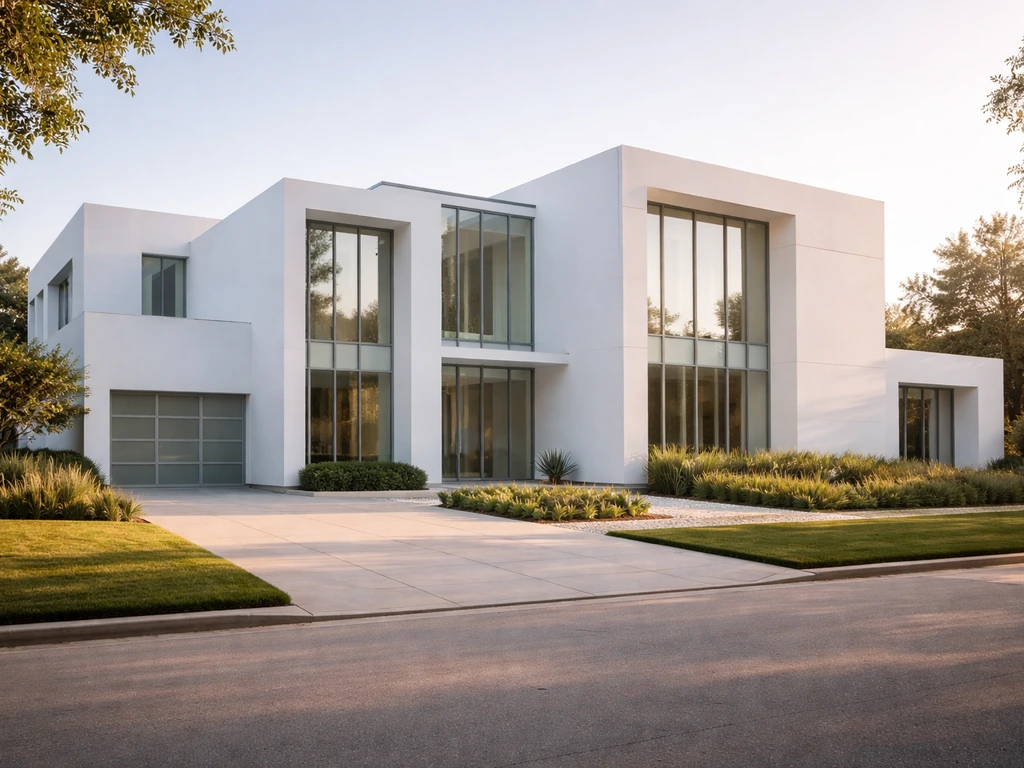
The most concrete recent data point is the October 2025 listing of the Rachofsky House at $23 million. The home is a Richard Meier-designed residence in Dallas that has been the centerpiece of the Rachofsky art and philanthropy story for decades. Interestingly, the house was part of the original 2005 DMA donation, but it appears the family retained use of the property and has since put it on the open market, citing estate planning. UPI's 2005 coverage of the Dallas Museum of Art gift notes that blank" rel="noopener noreferrer">the Rachofsky House, designed by Richard Meier, was included in the donation package. Beyond the primary residence, a Reddit thread discussing Rachofsky's real estate portfolio suggests additional Dallas-area properties, though those would need to be verified through official Dallas County property records before being treated as confirmed assets.
Investment portfolio and other assets
Any sophisticated fund manager who wound down a $300 million fund would be expected to redeploy personal capital into a diversified investment portfolio. There is no public documentation of specific positions, but standard wealth management practice for someone at this profile level would include equity holdings, private equity stakes, and fixed-income instruments. The Howard Earl Rachofsky Foundation (EIN documented via Cause IQ, most recent tax filing year 2024) provides an indirect window: foundation assets represent a separate, philanthropically dedicated pool of capital, but the size of that foundation relative to peers gives a rough sense of the overall wealth picture.
How this estimate is built: methodology and assumptions
Net worth estimates for private individuals like Rachofsky follow a specific logic. You start with the largest confirmed asset events (the hedge fund scale, the DMA gift valuation, the real estate listing), then work backward to infer a minimum wealth floor. From there, you apply reasonable assumptions about retained assets, investment returns over time, and any disclosed liabilities or philanthropic transfers. Here is the specific methodology used for this estimate:
- Anchor on the hedge fund data point: $300M returned to investors in 2003 implies the fund managed at minimum that amount. Personal carry and co-investment over a multi-year fund career at that scale conservatively generates $30M to $80M in personal wealth from fund operations alone.
- Subtract documented philanthropic transfers: The 2005 DMA gift is estimated at approximately $50 million in combined art, real estate, and endowment value. This reduces the gross wealth figure but is one of the few hard-number disclosures available.
- Add real estate at current market value: The Rachofsky House listing at $23 million in late 2025 is the clearest current asset marker. Additional properties (unconfirmed) could add to this.
- Estimate retained art collection value: Given that a portion of the collection was donated and a portion retained, and given the appreciation trajectory of the artists Rachofsky collected (many now blue-chip contemporary names), a conservative retained collection value of $50 million to $150 million is reasonable.
- Account for investment growth since 2003: Capital from the hedge fund wind-down, invested in a diversified portfolio for 20-plus years, would have grown substantially. A conservative 6% annual return on $100 million over 20 years yields roughly $320 million.
- Apply uncertainty discount: Because no public financial disclosures (SEC filings, Bloomberg data) exist for personal holdings, a 20 to 30 percent uncertainty band is applied to produce the published range rather than a single point estimate.
Assets vs. liabilities: what likely makes up the number

Breaking Rachofsky's estimated net worth into its probable components helps clarify where the number comes from and where uncertainty is highest.
| Asset Category | Estimated Value | Confidence | Notes |
|---|---|---|---|
| Rachofsky House (real estate) | $20M – $23M | High | Listed at $23M in Oct 2025; market value well-documented |
| Retained art collection | $50M – $150M | Low-moderate | Major portion donated; retained works unquantified publicly |
| Investment portfolio (equities, PE, fixed income) | $100M – $200M | Low | Inferred from hedge fund career proceeds; no public disclosure |
| Howard Earl Rachofsky Foundation assets | Separate (not personal net worth) | Moderate | Documented via IRS filings; philanthropically ring-fenced |
| The Warehouse Dallas (operational asset) | Not quantified | Low | Exhibition/education space; co-owned with Vernon Faulconer |
| Other real estate (unconfirmed) | Unknown | Very low | Reddit thread suggests additional properties; unverified |
| Liabilities (mortgages, debt) | Unknown | Very low | No public debt disclosures; likely modest relative to asset base |
The liabilities side of this ledger is genuinely opaque. For private individuals of this wealth level who are not running active businesses with external financing, personal debt tends to be a small fraction of total assets. There is no indication in any public reporting of significant financial distress or leveraged positions. The estate-planning framing around the Rachofsky House sale actually suggests conservative financial management rather than a need to liquidate.
What changes the number over time
Several factors could move Rachofsky's net worth estimate significantly in either direction, and a few are already in motion as of April 2026.
- Rachofsky House sale outcome: If the $23 million listing closes, it will convert an illiquid real estate asset into cash, but will not by itself increase net worth. What matters is where that capital is redeployed. Wallpaper* reported on the listing as recently as March 2026, suggesting it had not yet closed at that point.
- Art market conditions: Contemporary art values are sensitive to auction cycles and collector sentiment. Major works by artists in Rachofsky's collection tier can swing 20 to 40 percent in value across a bull-to-bear art market cycle.
- Foundation activity: Increased grant-making from the Howard Earl Rachofsky Foundation would reduce the foundation's assets but does not directly reduce personal net worth (the assets were already transferred out).
- Additional philanthropy: Rachofsky has a documented history of large institutional gifts. Any new major donation to DMA, the Modern Fort Worth, or a similar institution would reduce the gross asset figure.
- Investment portfolio performance: The largest single component of estimated net worth (the inferred investment portfolio) is also the most sensitive to broader market conditions. A 20 percent equity drawdown could reduce the midpoint estimate by $20 to $40 million.
- Estate planning decisions: The explicit framing of the house sale as estate planning suggests the Rachofskys are actively restructuring asset ownership. Trust transfers, family gifting, or further philanthropic structuring could change the publicly visible picture significantly.
How to verify this and dig deeper yourself

If you want to go beyond this estimate and build your own picture, here is a practical checklist of sources worth checking, roughly in order of reliability.
- Dallas County Appraisal District (DCAD): Search 'Rachofsky' at dcad.org to pull current property records and assessed values for any Dallas County real estate. This is free, public, and updated annually.
- IRS Form 990 for the Howard Earl Rachofsky Foundation: Available via ProPublica Nonprofit Explorer or Cause IQ. The 990 shows total assets, annual grants, and investment income, giving you a transparent window into the philanthropic vehicle.
- SEC EDGAR: Search for any investment advisor registrations or 13F filings under Regal Asset Management or Rachofsky's name. Regal closed in 2003 so active filings are unlikely, but historical filings may show portfolio scale.
- Dallas Morning News archives: The DMN has covered Rachofsky extensively, including the October 2025 house listing. Setting a Google News alert for 'Rachofsky' will catch new financial disclosures or asset events as they happen.
- Artnet and Artsy auction records: Search 'Rachofsky' as a collector/provenance record in Artnet's auction database. Works previously owned by him that come to market will show realized prices, giving indirect evidence of collection value.
- D Magazine Dallas archives: D Magazine has profiled Rachofsky multiple times starting from the 2005 homes list through the 2011 profile. The April 2026 version of the 2011 article is still live and worth reading for biographical context.
- Forbes and Bloomberg billionaires trackers: Search both platforms directly for Rachofsky. As of this writing, neither tracks him, but that status could change. The absence itself is a useful data point: it suggests his net worth is likely below the threshold where these platforms focus attention (roughly $1 billion for consistent Forbes coverage).
- The Warehouse Dallas and Nasher Sculpture Center press releases: These institutional sources occasionally disclose gift values or collection details that help bound the art asset estimate.
One practical note on timing: net worth estimates for private individuals like Rachofsky are worth revisiting after major asset events. The Rachofsky House sale, when it closes, will be the most significant public financial event in years and should prompt an updated estimate. Check Dallas County property records and DMN coverage in the months following any reported sale completion.
For readers who came here comparing similar names: Howard Rachofsky is a distinct individual from others with phonetically similar names. His profile as a Dallas hedge fund manager and art patron is well-documented and specific. If you are researching the broader Rachofsky family financial picture, a companion profile covering Howard and Cindy Rachofsky together provides additional context on the joint asset and philanthropic structure they have built over several decades.
FAQ
How can I confirm I’m looking at the right Howard Rachofsky when search results mix up similar spellings?
Use the IRS-registered Howard Earl Rachofsky Foundation plus the Dallas Museum of Art and The Warehouse Dallas connections as a lock, then verify that the person matches the Rachofsky House (Richard Meier-designed) and the spouse listing as Cindy Rachofsky. Names alone are unreliable for this topic.
Why is the net worth figure presented as a wide range instead of one exact value?
Treat the estimate as a range, not a single number, because the largest art and investment positions are often held through trusts, partnerships, or private vehicles. Even when an asset is public (like a house listing), the net worth impact depends on ownership structure and whether proceeds are already reinvested or pledged.
Does the $23 million Rachofsky House listing automatically translate to that amount added to net worth?
A reported $23 million listing helps estimate the house value, but it does not automatically mean net worth increases by $23 million. You need to account for whether the family still owns it outright, whether there are mortgages, and whether the reported sale price ends up above or below the list price.
What should I treat as the most important hedge-fund datapoint when estimating his wealth?
Regal Asset Management returning $300 million to investors in 2003 is the strongest scale signal mentioned, but it does not reveal the fund’s gross assets under management at every year. Your personal model should treat it as a floor on fund significance, then apply uncertainty for historical fee and carried interest outcomes.
How do major philanthropic gifts affect a net worth estimate in practice for someone like Rachofsky?
The $50 million DMA gift and related endowment described in the article are evidence of substantial transfers, but donations can include forms beyond cash (art, property, or bundled endowment structures). For net worth, distinguish between donated assets at estimated fair value and any retained rights, like continued residence or limited use.
Can the Howard Earl Rachofsky Foundation filings be used to estimate his personal net worth directly?
Yes, foundation assets can be a useful cross-check, but foundation size is not equal to personal net worth. Money inside the foundation is usually restricted by grantmaking rules, so it reflects wealth that is controlled for philanthropy rather than the liquid resources the individual can freely deploy.
What are the most common mistakes people make when modeling liabilities for private individuals?
The article suggests liabilities are unclear and likely not heavily leveraged, but you should still check for debt using property records for the known addresses and any publicly available UCC filings if you’re doing deeper due diligence. Without that, a net worth model can overstate the impact of assets if mortgages or other obligations exist.
How should I handle valuation uncertainty for the retained portion of an art collection?
Art holdings are especially timing-sensitive because valuations can swing with market conditions and because “collection value” may reflect donated pieces separately from retained works. In your own model, use a conservative haircut for appraised values unless you can link specific works to recent sales or formal valuations.
If other sites report very different numbers, what assumptions are most likely driving the discrepancy?
If you’re comparing estimates across websites, look for different assumptions about (1) whether the house value is net or gross, (2) how they treat donated art and property, and (3) what return rate they assume for reinvested capital since the 2003 wind-down. Two sources can both be “range-based” yet differ heavily on these inputs.
What are the best times to revisit the estimate, and what specific event would most likely change it?
Watch for updates after major public asset events, especially completion of the Rachofsky House sale. Once the sale closes, updated property records and credible reporting can reduce uncertainty around price, ownership, and any related transfers, which should narrow the range.