
Vadim Rabinovich's net worth is estimated in the range of $200 million to $500 million as of mid-2026, though no audited or independently verified figure exists. That range is built from declared asset disclosures he filed as a Ukrainian parliamentary deputy, known business ownership in media and real estate, and contextual benchmarks for Ukrainian oligarchs of his generation and profile. It is a credible working estimate, not a confirmed number.
Vadim Rabinovich Net Worth: Estimate, Assets, and Sources

Marcus Holloway
29 May 2026
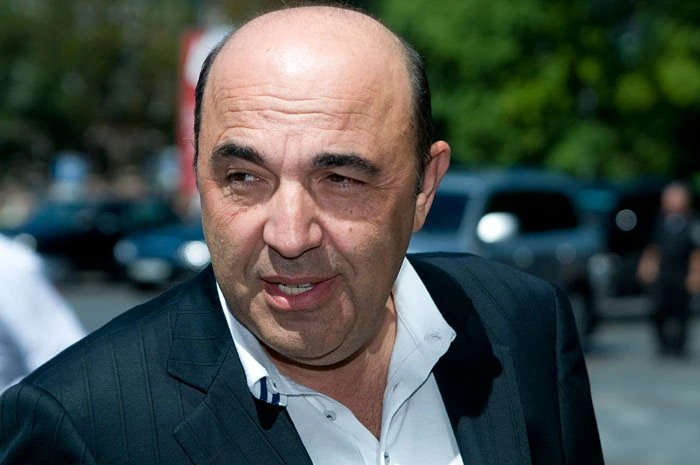
Who Vadim Rabinovich is and why people search his wealth

Vadim Zinovyevich Rabinovich was born on August 4, 1953, in Kharkiv, Ukraine. He is most accurately described as a Ukrainian-Israeli oligarch, media proprietor, and Jewish community leader. Over the past three decades he has held a remarkable set of roles: founding the Media International Group (MIG) in 2000, serving as President of the Ukrainian Jewish Congress, founding the Eurasian Jewish Congress, sitting in Ukraine's Verkhovna Rada (parliament) until his term ended in November 2022, and at one point purchasing a stake in Arsenal Kyiv football club. A JPPi (JCPS/Israeli institute) annual assessment PDF mentions Vadim Rabinovich as founding the Eurasian Jewish Congress, providing documented context for his leadership activities. He holds Israeli citizenship and was formerly a Ukrainian citizen.
People search his net worth for a few distinct reasons. His public political role meant he filed official Ukrainian asset declarations, which surfaced in media regularly. His business empire in media and securities generated headline numbers in those declarations. And his controversial public positioning, including being placed on a Ukrainian government 'collaborator' list, put him back in financial news cycles. He is not to be confused with Alex Rabinovich of the U.S.-based 'Rabinovich & Associates' SEC enforcement case from 2008, which is an entirely separate person.
The net worth estimate: range and latest figure
The most defensible estimate places Rabinovich's net worth somewhere between $200 million and $500 million as of 2026. The lower end reflects declared liquid assets, declared real estate, and known media holdings at conservative valuations. The upper end reflects the possibility that undisclosed equity stakes, offshore structures common among Ukrainian oligarchs of his era, and the proceeds from his 2020 declaration showing approximately 76.75 million Ukrainian hryvnia (roughly $2 million at prevailing rates, but potentially representative of much larger underlying corporate positions) are underrepresented in public records.
He does not appear on the Forbes World's Billionaires List for 2026 (which uses March 1, 2026 valuations), and no Bloomberg Billionaires Index profile for him has been confirmed. Neither absence definitively caps his wealth below $1 billion, but it does indicate that independent financial analysts with access to hard data have not placed him in that tier. Estimation sites like PeopleAI carry their own disclaimers explicitly warning that their figures are not accurate, so those should be treated as rough directional signals only.
How the estimate is calculated
Reconstructing Rabinovich's wealth requires layering several types of evidence, because no single source is complete. Here is the methodology used to arrive at the $200 million to $500 million range.
Official Ukrainian asset declarations

As a member of parliament, Rabinovich was required to file annual asset declarations with Ukrainian authorities. These are the closest thing to primary financial evidence available for him. His 2013 declaration disclosed three houses, five cars, approximately one million hryvnia in annual income, and 87,800 hryvnia in bank accounts. His 2015 declaration added cash holdings of $386,000 USD. His 2020 declaration showed earnings of 430,800 hryvnia alongside 76.75 million hryvnia from the sale of securities and corporate rights. He also declared a 13 million hryvnia loan from his wife, which counts as a liability offsetting net worth.
These declarations are useful anchors, but they have limitations. Ukrainian politicians' declarations historically underreport offshore assets, beneficial ownership stakes, and assets held through intermediaries. The securities proceeds in 2020 may reflect only a portion of total equity transactions in that year.
Business asset valuation
MIG, which Rabinovich founded in 2000, encompasses media holdings including Stolichnye Novosti publishing and the MIGnews/MIGnovosti online platforms. Media businesses of this type in the Ukrainian market carry valuations that are difficult to pin down without private financial statements, but comparable Ukrainian media groups have been valued in the tens of millions of dollars range. His Arsenal Kyiv stake was purchased for an undisclosed amount, and the club's value is modest by European football standards.
Contextual benchmarking
Ukrainian oligarchs who built media and business empires in the 2000s and held parliamentary seats typically accumulated wealth in the hundreds of millions of dollars range. Rabinovich's profile is comparable in structure, though smaller in scale, to better-known Ukrainian businessmen. Applying that peer-group lens supports the mid-range estimate rather than a figure in the low tens of millions or above a billion.
Income streams and career drivers
Rabinovich's wealth has been built across several overlapping income streams over decades.
- Media ownership: MIG's portfolio generates advertising and licensing revenue from print and digital news platforms in Ukraine and the Russian-speaking diaspora.
- Securities and corporate rights trading: His 2020 declaration showed roughly 76.75 million UAH from alienating securities and corporate rights, suggesting active portfolio management or business exits.
- Sports investment: The Arsenal Kyiv acquisition, while the purchase price was undisclosed, represents both a reputational and financial asset.
- Parliamentary salary: As a Verkhovna Rada deputy through November 2022, he drew a state salary, though this is a minor component of overall wealth.
- Community leadership roles: His presidencies of the Ukrainian Jewish Congress and Eurasian Jewish Congress, and his involvement with Keren ha-Yesod in Ukraine and the Ukraine-Israel Chamber of Commerce, do not directly generate personal income but correlate with business network access and deal flow.
- Real estate: Three declared houses as of 2013 represent asset appreciation over time, particularly pre-war Ukrainian real estate values.
Assets, property, and investments to look for

When researching Rabinovich's wealth, the asset categories most likely to hold significant value are real estate holdings (at least three houses declared in 2013, likely more by now or before the Russia-Ukraine war reduced Ukrainian real estate values), equity in MIG subsidiaries and associated media companies, any remaining stake in Arsenal Kyiv, securities portfolios referenced in the 2020 declaration, and cash or bank deposits (at least $386,000 in cash declared in 2015). The declared 13 million hryvnia spousal loan is a liability to factor against these.
Given his Israeli citizenship and business connections spanning Ukraine, Israel, and the broader post-Soviet Jewish community, assets held outside Ukraine are plausible but not documented in available public records. Israeli property registries and corporate filings would be the logical next place to look for undisclosed holdings.
Controversies, legal issues, and events affecting his net worth
Rabinovich's financial situation has been materially complicated by several major developments, particularly since Russia's full-scale invasion of Ukraine in 2022.
- Ukrainian 'collaborator' designation: Jüdische Allgemeine reported that Rabinovich was placed on a Ukrainian government list identifying him as a collaborator. This kind of designation, while not equivalent to an asset freeze, carries reputational and potential legal consequences that can affect business relationships and asset values.
- End of parliamentary mandate: His Verkhovna Rada tenure ended in November 2022. Losing a parliamentary seat in Ukraine also means losing the legal immunity protection that typically shields sitting deputies from civil and criminal proceedings, which increases financial legal risk.
- Ukraine-Russia war impact: Ukrainian media assets and real estate have experienced significant valuation disruptions since 2022. Any Ukrainian-based assets in his portfolio would be subject to this.
- Public political positioning: His statements and affiliations have drawn criticism from both Ukrainian and Jewish community stakeholders, which can affect the business relationships that drive deal flow and income.
- No confirmed Western sanctions: As of the research available for this article, Rabinovich does not appear on U.S. OFAC, EU, or UK sanctions lists, which would be a much more direct and severe wealth impact. That status should be verified and can change.
It is worth noting that the SEC 2008 case involving 'Rabinovich & Associates, LP' and 'Alex Rabinovich' has no confirmed connection to Vadim Rabinovich, and treating it as evidence of his legal exposure would be an error. Name-match searches in legal databases require careful party-identity confirmation before drawing conclusions.
How to verify and update this estimate over time
Net worth estimates for figures like Rabinovich go stale quickly, especially given ongoing geopolitical shifts. Here are the most practical steps to keep the number current.
- Check Ukrainian e-declaration records: The NAZK (National Agency on Corruption Prevention) maintains an online portal where declarations filed by current and former Ukrainian officials are publicly searchable. Rabinovich's declarations through 2022 should be accessible there and provide the most granular asset data available.
- Monitor Forbes Ukraine and Ekonomichna Pravda: These outlets regularly publish Ukrainian wealth rankings and business profiles. A search for Rabinovich on both sites will surface any updated coverage of his business activities or asset changes.
- Check Israeli corporate and property registries: Given his Israeli citizenship, the Israeli Companies Registrar and Israel Land Authority records are logical sources for undisclosed corporate stakes or real estate holdings.
- Search OFAC, EU, and UK sanctions lists: Run his full name through official government sanctions portals. A sanctions designation would materially change both the estimate and its framing.
- Search Ukrainian court records (Єдиний реєстр судових рішень): The Unified State Register of Court Decisions in Ukraine is publicly accessible and can surface litigation involving Rabinovich that may indicate asset disputes or freezes.
- Track Arsenal Kyiv ownership changes: Ukrainian football club ownership is reported in sports media and club filings. Any sale or dilution of his stake would be a notable data point.
- Evaluate new media coverage with source discipline: Tabloid-style wealth claims (including most celebrity net worth aggregator sites) should be treated as directional only. Prioritize declaration disclosures, investigative journalism with sourcing, and official registries.
One practical habit: set a Google Alert for 'Vadim Rabinovich' in both English and Ukrainian ('Вадим Рабінович') to catch declaration summaries, court filings, and business news as they surface. Readers interested in comparable figures in this space may find it useful to look at how wealth is tracked for similarly structured businessmen and community leaders across the post-Soviet and Israeli business worlds, as the methodological challenges are often the same.
Bottom line on the number
The $200 million to $500 million range is the most defensible estimate given what is publicly documented. If you are comparing this style of figure, you can also review mark rabkin net worth using the same kind of declaration and methodology checks. If you are specifically tracking Hesh Rabkin net worth, focus on verified disclosures and valuation methods, since public figures in this space can be misleading. For a deeper look at ramzin real estate net worth, focus on how publicly declared real estate assets and related business interests translate into valuation benchmarks $200 million to $500 million range. The lower bound is anchored in declared assets and known business holdings. The upper bound accounts for the realistic possibility of undisclosed offshore or Israeli-domiciled assets typical for someone with his profile and history. He is not a confirmed billionaire, and any source claiming a specific round-number figure without tracing it to declaration data or a named valuation methodology should be treated with skepticism. As the war in Ukraine continues to reshape asset values and legal landscapes, this estimate warrants revisiting at least annually.
FAQ
How can I tell whether a “net worth” number I see online for Vadim Rabinovich is reliable or just a guess?
Check whether the source ties its figure to named disclosures (for example, specific Ukrainian declaration years) or to a stated valuation method for media and real estate. If it gives a single round number without showing what assets were valued (and how), treat it as directional, not dependable.
Why does the estimate use a wide range instead of one exact figure?
Because key assets (especially beneficial ownership through intermediaries, offshore structures, and private company stakes) are often not fully captured in public records. Valuation for media and securities can also vary materially depending on whether you use conservative market multiples or liquidation-style assumptions.
Do Ukrainian asset declarations show his full wealth, including money held abroad?
Not completely. Declarations are the closest anchor, but politicians’ filings can underrepresent offshore or indirectly held assets. If you want to approximate foreign holdings, look for corroboration in country-specific registries (such as Israel property and corporate ownership), rather than assuming the declaration totals include everything.
Could his net worth have changed drastically after 2022 due to the war?
Yes. Real estate values in Ukraine, the liquidity of securities, and the operating value of media assets can all shift after major geopolitical events. A prior valuation might overstate or understate current value, especially if asset impairment or restructuring occurred.
What is the most important “hidden” variable in estimating his wealth?
Whether he retains significant equity stakes that are not fully visible in public declarations. This includes holdings inside MIG subsidiaries, indirect ownership via intermediaries, and any remaining positions that were not captured as fully in the securities proceeds figures.
How should I interpret the 2020 securities-related amount in his declaration when estimating net worth?
Treat it as a transaction signal, not a complete map of total equity. The declared amount may represent only the portion of securities or corporate rights he sold in that year, so net worth could still include other holdings not reflected by that figure.
Does the spousal loan he declared materially affect net worth calculations?
It should be treated as a liability offset. Even though it is not an “asset,” including it prevents overestimating net worth by ignoring declared obligations. When ranges are used, liabilities can shift where the middle of the range lands.
Why is he sometimes mentioned alongside legal or SEC items involving “Rabinovich,” and is that relevant to his net worth?
It can be misleading due to name matches. The article notes the SEC matter involves a different person, and you should verify identity (party name, jurisdiction, dates, and entities) before assuming any legal exposure or financial penalty connects to him.
How often should I update the estimate if I’m tracking Vadim Rabinovich over time?
At least annually, and sooner if there are new declaration summaries, material business updates, or major legal or sanctions developments. Net worth estimates become stale quickly when asset values and ownership structures change.
What quick checks can I do before accepting a new “net worth” headline number?
Look for at least one of these: a cited declaration year, a stated list of assets (real estate, media equity, securities, cash), or a valuation approach tied to comparable Ukrainian media and oligarch-era ownership structures. If none are provided, the number is likely fabricated or overly speculative.