
As of June 2026, Rabbi Eli Stefansky's net worth is estimated in the range of $1 million to $5 million, based on his documented background in real estate prior to making aliyah, his current leadership of a funded nonprofit organization (Mercaz Daf Yomi, EIN 88-3705474), and typical compensation patterns for high-visibility Torah educators. There is no publicly confirmed personal income figure, no filed personal disclosure, and no property record that pins down an exact number. That range reflects what is reasonable given the available signals, not a precise verified sum.
Rabbi Eli Stefansky Net Worth: What Is Known and Estimated

Marcus Holloway
6 Jun 2026
Who Rabbi Eli Stefansky is (and why people search his wealth)

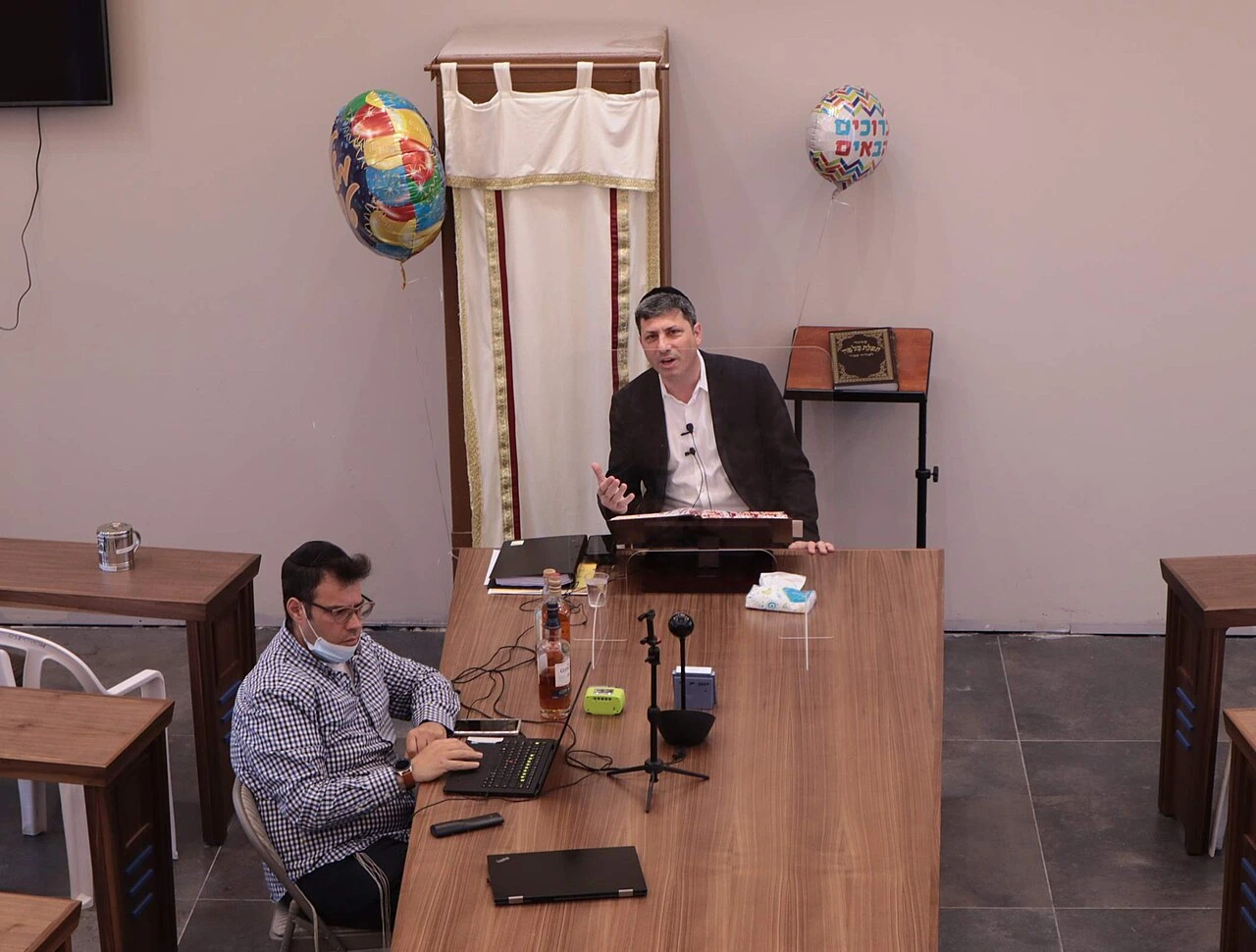
Rabbi Eliyahu (Eli) Stefansky is the founder of Mercaz Daf Yomi (MDY), a Torah learning organization based in Ramat Beit Shemesh, Israel. Originally from Chicago, he made aliyah in 2013 and began hosting a daily daf yomi shiur from his home. That grassroots setup grew into one of the most widely followed daf yomi programs online, distributed via YouTube, Zoom, and WhatsApp. He is also associated with the popular "8 Minute Daf" video format, which condenses each daily Talmud page into a short recap for busy learners.
A quick note on naming: you may see the name spelled "Stefansky" or "Stepansky" in different places. Both refer to the same person. Some search results may also surface a different "Eli Stefansky" listed on ProPublica as an officer at Jerusalem Orphan Home Inc. or Yeshiva Arzei Levanon, with $0 reported compensation in those filings. Those appear to be incidental name matches and should not be confused with the MDY founder.
People search his net worth for several understandable reasons. MDY runs large-scale fundraising campaigns, hosts major siyum events, and solicits sponsorships ranging from $35 (a single gemara) to $2,500 (kollel support). When an organization publicly raises over $1.25 million per year for a single event category alone, curious followers naturally wonder how that wealth flows and whether the founder benefits personally. It is a fair question, and one worth answering as transparently as the available data allows. If you are trying to understand Rabbi Greg Hershberg net worth, the same focus on verifiable income signals and public disclosures applies.
Rabbi Eli Stefansky net worth: what we can verify vs. what's estimated
Here is what can actually be verified versus what requires estimation, as of the date this article was researched.
| Category | Status | Notes |
|---|---|---|
| MDY nonprofit status (US) | Verified | 501(c)(3), EIN 88-3705474 |
| Organizational budget scale | Partially verified | MDY states events cost over $1.25M/year; budget categories include kollel, salaries, gemaras, construction |
| Founder's personal salary from MDY | Not publicly confirmed | MDY does not disclose founder compensation on its site; Form 990 records are the place to check |
| Prior real estate career | Corroborated by multiple sources | Described in Wikipedia, Hidabroot interview, and Ami Magazine; no dollar figures attached |
| Current property/asset holdings | Not publicly documented | No Israeli or US property records have been cross-referenced in available public sources |
| Personal net worth figure | Estimated only | No primary financial disclosure exists; $1M–$5M range based on indirect signals |
The honest summary: nothing in the public record gives a hard number. The estimate is built from surrounding signals, described in detail below. If you are primarily searching for a single published figure, you can compare this estimate with what people claim in summaries of Rabbi Yaron Reuven Net Worth. For more detail, see how the Rabbi Moshe Weiss net worth comparison differs from these institutional and estimation signals.
Primary income sources

Organizational salary
MDY's US-registered 501(c)(3) entity is required to file IRS Form 990 returns, which disclose officer and key employee compensation above a reporting threshold. MDY's budget line items reference "salaries" and "workers" as explicit categories, confirming the organization does pay staff. Whether the founder draws a personal salary, and at what level, is a question the Form 990 should answer directly. Comparable nonprofit Torah organizations with similar scale often pay their executive director or founder somewhere between $80,000 and $200,000 annually, though that is a benchmark, not a confirmed figure for Stefansky.
Prior real estate career

Multiple sources, including Wikipedia and a biographical piece published by Hidabroot, describe Stefansky as having a significant real estate background before his move to Israel. One account references a 2005 brokerage opportunity involving buying and managing apartments. The Hidabroot framing describes him as a "real estate mogul" before his transition to Torah teaching. If accurate, assets accumulated during that earlier career could represent a meaningful base of personal wealth that predates and is independent of MDY entirely. However, no dollar figure has been published for that prior career, and the word "mogul" in a biographical narrative is not a financial disclosure.
Content, speaking, and teaching
MDY's YouTube channel has substantial viewership, and Wikipedia reports high daily preparation and audience numbers as of 2025. Third-party analytics pages for Rabbi Eli Stefansky's “Mercaz Daf Yomi by R' Eli” YouTube channel, such as SPEAKRJ's audit report, can be used to gauge audience size, even though they are not financial disclosures Third-party analytics pages for the “Mercaz Daf Yomi by R' Eli” YouTube channel.
High-visibility Torah educators at this scale can generate income through speaking engagements, event appearances, content licensing, and book or publication royalties. There is no published speaking fee for Stefansky, and no confirmed licensing arrangement, but these are plausible income streams worth noting. For context, other prominent Torah figures with comparable digital reach have reported speaking fees in the range of $5,000 to $25,000 per engagement, though that varies widely.
Sponsorships and donations (organizational, not personal)
MDY's sponsorship tiers are detailed publicly: a free gemara sponsorship starts at $35, kollel sponsorship runs $2,500, and special events like siyumim involve large campaign goals. It is critical to be clear that these funds flow to the organization, not to the founder personally. Donations received by a 501(c)(3) cannot be treated as personal income for the founder except to the extent the founder draws a disclosed salary or receives documented compensation.
Conflating MDY's fundraising totals with Stefansky's personal net worth is one of the most common errors in these kinds of estimates. People searching "rabbi steve leder net worth" should use the same caution and verify whether any figure comes from reliable disclosures rather than conflating unrelated claims. Understanding those personal assets and income sources is key to estimating gerer rebbe net worth accurately Stefansky's personal net worth.
Major assets and lifestyle indicators

An Ami Magazine interview from 2022 includes a detail that is actually useful here: Stefansky chose to move from a "spectacular home" to a simple apartment in Ramat Beit Shemesh when he began focusing on the shiur. That suggests he had the financial capacity to live in premium housing but made a deliberate lifestyle choice away from it. It is a lifestyle signal, not an asset disclosure, but it does suggest a level of prior financial comfort.
MDY's physical infrastructure, including what Ami Magazine described as a "Daf Yomi Building," represents organizational assets tied to the nonprofit, not personal real estate. The planning and construction costs associated with that building belong to MDY as an institution. Readers should not count organizational real estate toward a founder's personal net worth unless there is documented personal ownership.
No Israeli Tabu (land registry) records, US property records, or business ownership filings for Stefansky personally have been surfaced in available public sources. That absence is notable: it does not mean assets do not exist, but it does mean they cannot be counted in any verified column.
How the net worth estimate was built
Estimating net worth for a private individual who leads a nonprofit requires being explicit about the methodology, because it is easy to get this wrong. Here is exactly how the $1 million to $5 million range was constructed and what assumptions it rests on.
- Organizational compensation baseline: Nonprofits of MDY's apparent scale (budget items suggesting seven-figure annual operations) typically report executive compensation in the $100,000 to $200,000 range on Form 990. Applying a rough capitalized-income approach over a 10-plus-year career in religious education, plus savings and investment assumptions, supports a lower bound of roughly $500,000 to $1 million from this source alone.
- Prior real estate career: Multiple credible biographical sources describe a successful real estate background predating 2013. Even a modest reading of that career, with no deal sizes documented, suggests at least several hundred thousand dollars in accumulated capital. A more generous reading (consistent with the word "mogul" being used) could push this contribution to $1 million or more.
- Content and speaking income: Given the scale of MDY's reach, conservative estimates for periodic paid engagements or content revenue add a supplemental but uncertain contribution, modeled at the low end.
- Offsetting factors: Living in Israel, operating primarily through a nonprofit, and no confirmed luxury asset holdings all argue against the higher end of typical estimates for similarly visible religious figures.
- Resulting range: Combining a plausible accumulated real estate base, a multi-year nonprofit leadership salary, and modest supplemental income, $1 million to $5 million reflects a responsible range. It could be higher if the real estate career was more substantial than publicly described; it could be lower if salary is minimal and prior assets were largely liquidated to fund aliyah or donated.
The primary data sources used were: MDY's official site (organizational budget and EIN disclosure), IRS Form 990 availability via Candid and ProPublica Nonprofit Explorer (for methodology, not confirmed Stefansky-specific filings), Wikipedia's biographical entry, Ami Magazine's 2022 interview and 2020 building article, and the Hidabroot biographical piece. No single source provides a compensation figure. The estimate is transparent about that limitation.
How to check and update this estimate yourself
If you want to validate or refine this estimate on your own, there is a clear path to follow. The most direct route is MDY's Form 990 filings.
- Go to ProPublica Nonprofit Explorer (nonprofits.propublica.org) and search for "MDY Daf Yomi" or enter EIN 88-3705474 directly. Look for filed 990 returns, particularly Part VII, which lists officer and key employee compensation. Note that newly registered nonprofits may have a lag of one to two years before filings appear.
- Use Candid (candid.org, formerly GuideStar) to access the same 990 data, including any supplemental schedules. Candid notes the IRS requires most 501(c)(3) organizations to make their three most recent returns publicly available.
- For Israeli property records, the Israel Land Registry (Tabu) is publicly searchable but typically requires Hebrew-language navigation or a local agent. Searching for property registered to Eliyahu Stefansky in Ramat Beit Shemesh would be the relevant query.
- For US real estate history, county property records from Cook County, Illinois (Chicago) or wherever Stefansky held pre-aliyah property are searchable online by name in most jurisdictions.
- Set a reminder to revisit the 990 data annually: the IRS filing deadline for 990s is generally 4.5 months after the fiscal year ends, and Candid/ProPublica update their databases with a further lag of several months, so a filing for fiscal year 2025 might not appear until mid-to-late 2026.
Common myths and why net worth numbers vary online
Several patterns cause the wildly inconsistent net worth figures you will find on other sites, and all of them apply to someone in Stefansky's position.
- Conflating organizational revenue with personal wealth: MDY raises substantial funds annually. None of that is the founder's personal income unless it flows through documented compensation. Treating the $1.25 million event budget as a proxy for personal net worth is a straightforward error.
- Copying unverified figures from aggregator sites: Many celebrity net worth sites recycle each other's numbers without citing sources. A figure of, say, $3 million appearing on five different sites does not mean it was independently verified five times. It usually means one site made it up and four others copied it.
- Name confusion: As noted earlier, a different Eli Stefansky appears in ProPublica records as an officer at Jerusalem Orphan Home Inc. and Yeshiva Arzei Levanon with $0 compensation. If a site reported those $0 figures as the MDY founder's pay, the number would be both technically sourced and completely misleading.
- Treating a prior career description as a financial disclosure: Calling someone a "real estate mogul" is a narrative device, not an audited balance sheet. The same applies to any description of a "spectacular home."
- Ignoring the nonprofit structure: Founders of 501(c)(3) organizations do not personally own the organization's assets. MDY's building, its gemara inventory, its event infrastructure: none of that belongs to Stefansky personally any more than a hospital's MRI machine belongs to its CEO.
For context, similar estimation challenges arise with other high-profile Torah educators and religious leaders. If you are comparing this kind of uncertainty with other profiles, see also rabbi dovid hofstedter net worth as a related example of how figures vary online. The financial picture of any nonprofit-embedded religious leader tends to involve the same separation between organizational scale and personal wealth, and the same limited primary disclosure.
Until MDY's Form 990 data is fully available and reviewed, any figure for Stefansky should be treated as an informed estimate, not a fact. The range of $1 million to $5 million represents a responsible reading of the available signals as of June 2026, and should be updated as new filings or disclosures emerge. This is the reason many searches for Rabbi Elliot Cosgrove net worth end up mixing estimates with limited disclosure.
FAQ
How can I verify Rabbi Eli Stefansky’s personal income instead of just guessing from fundraising totals?
Use MDY’s IRS Form 990, then look specifically for compensation lines for officers and key employees (including any “other compensation”). Fundraising totals for the organization are not personal income unless there is a disclosed salary, documented benefit, or other payment to him personally.
Do MDY sponsorships and large siyum campaign goals affect Rabbi Eli Stefansky’s net worth directly?
Not directly. Donations are received by the nonprofit, and they generally fund program costs and staff. His personal net worth would only change if he is paid by the nonprofit in a way that is disclosed on Form 990 or if he has separate, documented personal investments unrelated to MDY.
What’s the easiest way to check whether the $1 million to $5 million estimate could be too high or too low?
Cross-check two things: (1) whether Form 990 shows officer compensation for Stefansky and (2) whether the organization’s spending indicates heavy reinvestment versus unusually high personal benefits. If officer pay is low while there is evidence of substantial staff and infrastructure spending, that tends to support a broader personal wealth estimate rather than a high “salary-driven” net worth.
If there is no Tabu or property record found, does that mean Rabbi Eli Stefansky is not wealthy?
No. It may mean assets are held through indirect structures, are jointly owned, are outside searchable datasets, or are not captured in the public sources you are checking. The article’s key point is that the absence of records blocks verification, it does not prove a zero asset situation.
Could other people named “Eli Stefansky” or “Stepansky” be causing net worth confusion?
Yes. Name collisions are common, including unrelated nonprofit officers or different individuals listed in public databases. The practical fix is to match identifiers such as location, roles, and associated organizations (MDY in Ramat Beit Shemesh) before using any financial figure.
Is it reasonable to treat “real estate mogul” descriptions as proof of a specific net worth amount?
It’s better to treat them as context only. Narrative language like “mogul” can exaggerate or simplify, and biographical pieces are not financial disclosures. Without purchase histories, sale records, ownership percentages, or income statements tied to him, you should not convert the description into a dollar figure.
How should I interpret Ami Magazine’s note about moving to a simpler apartment?
It’s a lifestyle signal, not an asset report. A move to a simpler home can indicate prior comfort and a deliberate choice to live modestly, but it cannot by itself confirm whether he sold assets, still owns prior property, or is maintaining investments elsewhere.
Are content earnings (YouTube, Zoom, WhatsApp, speaking) likely to change the net worth estimate?
They could, but only if they translate into documented personal income. Without disclosed speaking fees, licensing contracts, or 1099-style reporting, it stays speculative. A safer approach is to treat “digital reach” as a possible contributor while relying on Form 990 for confirmed compensation from MDY.
What’s the most common mistake when estimating net worth for nonprofit founders like Rabbi Eli Stefansky?
Conflating organizational scale with personal wealth. Donations and budgets reflect the nonprofit’s activity, not automatically the founder’s assets. The correct method separates nonprofit operations from personal compensation and personal ownership of assets.
Can the $1 million to $5 million range be updated, and where should I look first?
Yes, and the first place to look is the most recent MDY Form 990 for changes in officer compensation, staffing costs, and any unusual related-party payments. If there are new disclosures, they usually tighten the range more than biographical updates do.