
Based on publicly available nonprofit compensation data and the limited personal financial disclosures typical for religious leaders, Rabbi Arthur Schneier's estimated personal net worth falls in the range of $1 million to $3 million as of May 2026. That figure is built primarily from his reported nonprofit compensation of approximately $200,000 per year as President of the Appeal of Conscience Foundation, his long tenure as Senior Rabbi at Park East Synagogue, and the accumulated value of savings, retirement assets, and personal property that a senior leader in those roles would reasonably hold over decades. There is no publicly disclosed real estate held in his personal name, no known business equity, and no court records or liens tied to him personally, so this estimate sits at the conservative end and carries meaningful uncertainty.
Rabbi Arthur Schneier Net Worth: Estimate and How It’s Calculated

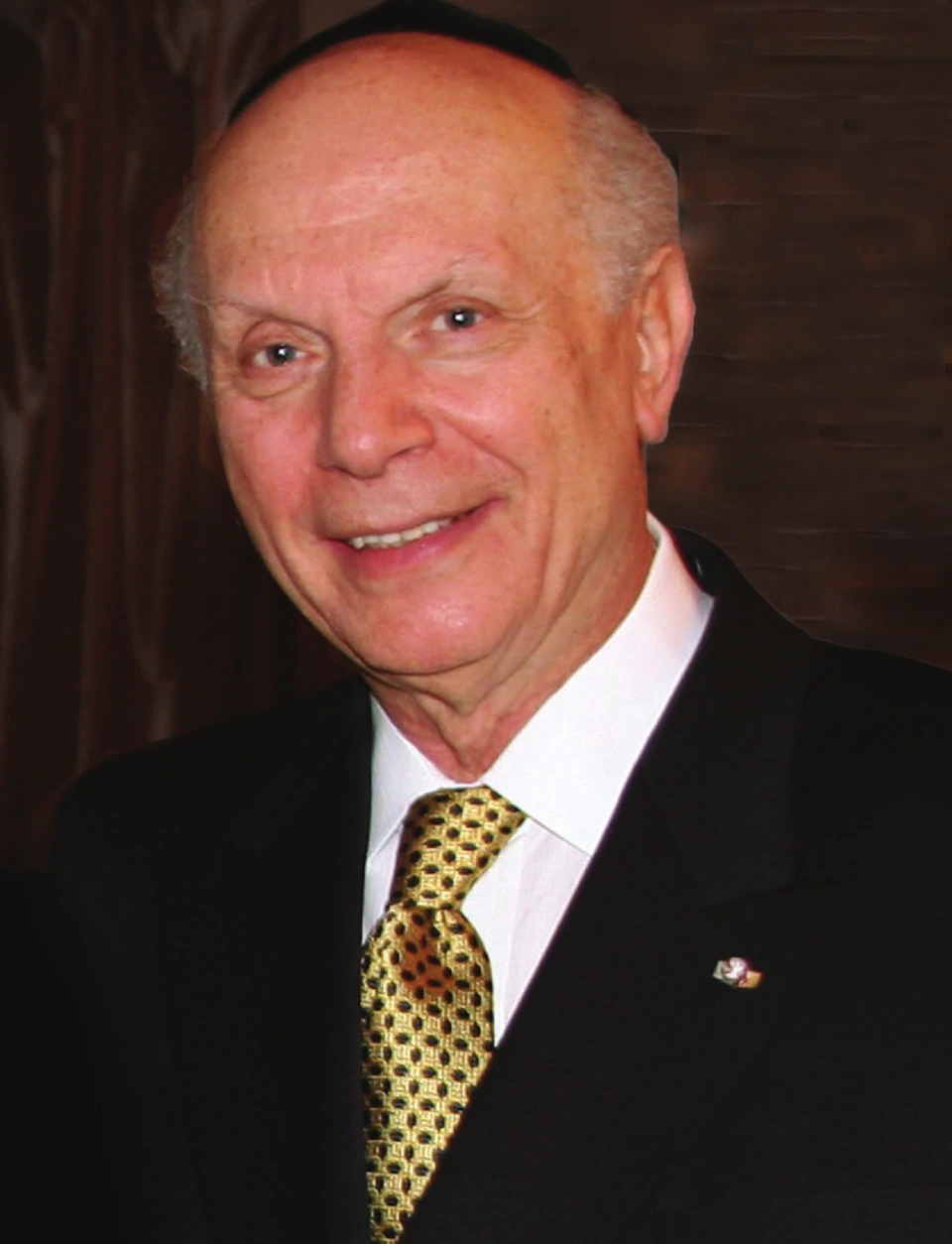
Confirming who Rabbi Arthur Schneier actually is

Before diving into the numbers, it is worth pinning down exactly who we are talking about, because name confusion is a real problem here. Rabbi Arthur Schneier was born in Vienna on March 20, 1930, survived the Holocaust, and arrived in the United States in 1947. He has led Park East Synagogue on Manhattan's Upper East Side since 1962 and founded the Appeal of Conscience Foundation, an interfaith and human rights organization, in 1965. He also founded what is now known as the Rabbi Arthur Schneier Park East Day School, located at 164 East 68th Street in New York. His identity is well-documented across Georgetown University's Berkley Center, the U.S. Congressional Record (which referenced him as far back as 1991), and multiple institutional websites.
The two most common sources of confusion are worth flagging directly. First, Rabbi Marc Schneier (born 1959) is Arthur Schneier's son and is himself a prominent public figure as president of The Foundation for Ethnic Understanding. Nonprofit filings, JTA news coverage, and foundation records for Marc's organization sometimes surface alongside searches for his father. They are two distinct people with separate organizational histories and separate financial footprints. Second, Bruce Schneier is a well-known cybersecurity expert with a large public speaking archive. A generic web search for 'Schneier net worth' can pull in fragments from any of these figures. Everything in this article refers specifically to Rabbi Arthur Schneier, the Vienna-born founder of the Appeal of Conscience Foundation.
What actually drives net worth for a religious and community leader
Wealth accumulation looks very different for a nonprofit and religious institution leader than it does for a tech founder or entertainer. The core driver is straightforward: salary and benefits paid over many decades, combined with careful saving and modest investment. There is no equity stake in a synagogue or a foundation to cash out. There are no stock options. The organization's assets (buildings, endowments, program funds) are legally separate from personal wealth and cannot be counted as the individual's net worth, even if that person runs the organization. What matters is what goes into the leader's personal pocket through compensation, housing allowances, and any outside income, and what they do with it over time.
For clergy specifically, there are additional wrinkles. Many rabbis and ministers receive a housing allowance that is tax-advantaged under U.S. law, meaning a portion of their compensation may not appear on a standard W-2 or Form 990 summary. Deferred compensation, retirement contributions, and nontaxable benefits also go unreported in the summary lines of a Form 990, as Charity Navigator explicitly notes in its documentation. So the $200,000 figure visible on ProPublica's summary for the Appeal of Conscience Foundation is likely an undercount of total economic compensation, not an overcount.
Income sources used in the estimate

Rabbi Schneier holds at least two active institutional roles that carry compensation. As President of the Appeal of Conscience Foundation (EIN 52-6062870), ProPublica's Nonprofit Explorer reports approximately $200,000 in annual compensation in the most recent summarized data available. As Senior Rabbi at Park East Synagogue, he would receive a separate rabbinic salary; senior rabbinical compensation at a prominent Manhattan congregation typically runs between $150,000 and $300,000 per year based on industry norms, though the synagogue's own Form 990 filings would need to be reviewed to confirm the exact figure. It is also possible that one role is treated as primary and the other as honorary given his age (96 as of 2026), but there is no public statement confirming that compensation has ceased or been reduced.
- Appeal of Conscience Foundation presidency: approximately $200,000 per year (confirmed via ProPublica Form 990 summary data)
- Park East Synagogue senior rabbi salary: estimated $150,000 to $300,000 per year based on comparable Manhattan congregational roles (exact figure requires synagogue Form 990 review)
- Rabbi Arthur Schneier Park East Day School founder/dean role: likely honorary or minimally compensated given the school is a separate nonprofit (EIN on file with NCES and Charity Navigator)
- Speaking appearances: documented public engagements including keynote at the Srebrenica Potocari Memorial (17th annual), interfaith summits, and United Nations events; fees for these events are not publicly disclosed
- Authored speeches and writings: evidenced by published PDF speeches on the Appeal of Conscience website; book royalties or honoraria, if any, are not publicly quantified
- Board or advisory roles: no confirmed paid board seats in publicly accessible records as of this writing
Assets and holdings: what the public record shows
No personal real estate held directly by Rabbi Arthur Schneier appears in publicly searchable New York City property records under his name. That is not unusual: many clergy of his generation hold assets through trusts, a spouse's name, or simply have not accumulated significant real property. The most prominent real estate connected to his name belongs to institutions, not him personally. PincusCo property records show that the parcel at 166 East 68th Street in Manhattan is owned by Rabbi Arthur Schneier Park East Day School (the institution, not the individual) and carries a $5 million debt instrument dated June 2020. This is organizational debt on an organizational asset. It has no bearing on his personal net worth except to illustrate that the school bearing his name operates independently with its own balance sheet.
On the personal investment side, there is no publicly available data: no SEC filings, no disclosed brokerage accounts, no known business equity stakes. Given decades of senior-level nonprofit and religious compensation in New York City, a reasonable assumption is that he holds retirement accounts (potentially a 403(b) or equivalent), accumulated savings, and possibly some modest personal investment portfolio. These are inferred from career longevity rather than confirmed by any document. Any personal real estate he may own would appear in New York City ACRIS deed records or the Department of Finance property database, neither of which shows a match under his name as of this writing.
Liabilities and why net-worth math matters

Net worth is assets minus liabilities, and that second half of the equation matters just as much as the first. On the personal side, there are no court-filed judgments, tax liens, or public debt records associated with Rabbi Arthur Schneier individually in the databases checked for this article. The $5 million debt tied to the school property is the institution's liability, not his. If he owns a personal residence (unconfirmed), there could be a mortgage, but no such property appears in public records.
The more important point is about separating the man from the organizations. The Appeal of Conscience Foundation carries its own total assets and total liabilities on its Form 990. Those organizational figures, whatever they are in the most recent filing year, belong to the foundation as a legal entity. They cannot be added to Rabbi Schneier's personal net worth. This is the single biggest misconception that inflates net worth estimates for nonprofit leaders: people see an organization with millions in assets and assume the founder is personally wealthy to that degree. That is not how nonprofit ownership works. He has no equity claim on the foundation's assets.
How the net-worth estimate is calculated, with confidence ranges
Here is the methodology used to arrive at the $1 million to $3 million range, with each component made explicit so you can see where uncertainty enters.
| Component | Estimated Value | Confidence Level | Primary Source |
|---|---|---|---|
| Appeal of Conscience Foundation compensation (accumulated savings from salary over career) | $400,000 to $700,000 | Moderate | ProPublica Form 990 summary ($200K/yr reported) |
| Park East Synagogue rabbinic salary (accumulated savings) | $300,000 to $600,000 | Low to Moderate | Industry norms for senior Manhattan rabbis; synagogue 990 not reviewed |
| Retirement accounts (403(b) or equivalent) | $200,000 to $600,000 | Low (inferred) | Career duration and income level; no direct disclosure |
| Personal real estate | $0 (no confirmed holdings) | Low (absence of evidence) | NYC ACRIS and property tax records search |
| Personal investments and savings | $100,000 to $400,000 | Low (inferred) | Reasonable assumption from career earnings |
| Less: estimated personal liabilities | $0 to $100,000 | Low (no lien or court records found) | Public court and lien databases |
| Total estimated net worth range | $1,000,000 to $3,000,000 | Low to Moderate | Aggregated estimate |
The confidence on this estimate is genuinely low to moderate. That is not a hedge; it is an honest reflection of the data. Religious leaders are under no obligation to publicly disclose personal finances, and Rabbi Schneier has not done so. The Form 990 compensation line is the single strongest verified anchor in this estimate. Everything else is reasoned inference from career trajectory, role type, and industry benchmarks. If additional records surfaced, such as a synagogue Form 990 showing his exact rabbinic salary, or a personal property deed in ACRIS, the range could be narrowed meaningfully. As it stands, the estimate could reasonably be revised upward to $4 million or downward to under $1 million if new information emerged.
How to verify and update this figure yourself
If you want to do your own research or check whether this estimate needs updating, these are the most productive places to look, roughly in order of usefulness.
- ProPublica Nonprofit Explorer (nonprofits.propublica.org): Search for 'Appeal of Conscience Foundation' or EIN 52-6062870. Download the most recent Form 990 PDF and go to Part VII (compensation of officers) and Schedule J (supplemental compensation). This gives you the most current confirmed compensation figure for his foundation role.
- Park East Synagogue Form 990: Search ProPublica or the IRS Tax Exempt Organization Search (apps.irs.gov/app/eos/) for Park East Synagogue's EIN. If the synagogue is a 501(c)(3) with annual revenue above the reporting threshold, it will file a Form 990 that includes compensation for its highest-paid employees, potentially including the senior rabbi.
- IRS Tax Exempt Organization Search: Cross-check both the Appeal of Conscience Foundation and the Park East Day School using EINs to find the most recently posted electronically filed 990s. The IRS also offers bulk 990 data downloads for researchers who want machine-readable versions.
- New York City ACRIS (acris.nyc.gov): Search under 'Party Name' for 'Arthur Schneier' to find any deeds, mortgages, or liens filed in his personal name across all five boroughs. A result here would add direct real estate data to the estimate.
- New York City Department of Finance property search (nycprop.nyc.gov): Search by owner name to find any property tax records associated with his personal name.
- New York State court records (iapps.courts.state.ny.us): Search for any civil judgments, liens, or legal proceedings filed under his name, which could indicate liabilities not visible in nonprofit filings.
- Charity Navigator and GuideStar/Candid (candid.org): These aggregate 990 data and sometimes include multi-year compensation histories, which help you identify trends rather than relying on a single year's figure.
- ProPublica Nonprofit Explorer API: For technically inclined readers, ProPublica offers a free API that returns 990-derived data fields programmatically. This is useful if you want to pull multiple years of compensation data from the Appeal of Conscience Foundation and build a longer-term compensation trajectory.
One practical caution: when searching, always confirm you are looking at records tied to Rabbi Arthur Schneier personally (born 1930, Vienna) rather than to the institutions named after him, to his son Rabbi Marc Schneier, or to any other Schneier. The day school's property records, for example, will show up under the school's legal entity name, not under him individually. Keeping that organizational separation clear is the single most important discipline in this kind of public-records research. For context on how similar estimation challenges apply to other religious and nonprofit leaders, the same methodology used here applies to figures like Rabbi Ari Berman and others in religious institutional roles, where nonprofit compensation disclosures serve as the primary financial anchor and personal wealth remains largely inferred. For readers specifically asking about Cedric Benarroch net worth, the same issue applies: public compensation disclosures are usually more available than personal asset details, so estimates are uncertain. This same kind of limited, publicly verifiable information is also why any Brian Ripka net worth figure should be treated as an estimate until specific sources are provided.
FAQ
Why do online pages sometimes claim Rabbi Arthur Schneier has a much higher net worth than $1 million to $3 million?
Most inflated figures come from mixing up personal wealth with organizational assets, for example treating Appeal of Conscience Foundation or synagogue holdings as if Rabbi Schneier could personally cash them out. Nonprofits do not work like privately owned companies, so assets shown on Form 990 belong to the organization as a legal entity, not the leader.
Can nonprofit compensation understate what Rabbi Arthur Schneier actually earned (and therefore his net worth)?
Yes. For clergy, reported compensation can miss value from nontaxable benefits, deferred compensation, and housing-related arrangements that may not show up fully in simple summaries. That is why a single visible compensation line is an anchor but not the whole picture.
How can I verify whether Rabbi Schneier’s Park East Synagogue salary is included in the estimate?
The most reliable check is the synagogue’s Form 990, looking for the compensation paid specifically to Rabbi Arthur Schneier (matching his full name and identity details). If the filing treats the position differently (primary versus reduced or honorary role), it can change the estimate noticeably.
Does the $5 million debt connected to the day school affect Rabbi Arthur Schneier’s personal net worth?
Generally no, if it is organizational debt tied to the day school’s property and balance sheet. The estimate treats liabilities as personal only when they are connected to him individually, such as a mortgage in his name or personal judgments.
Could Rabbi Schneier have personal real estate held through a trust or someone else’s name, and would that change the range?
It could. Public ACRIS results usually reflect the deedholder name, so assets held in a trust, owned by a spouse, or titled under an entity may not appear under his name in straightforward searches. If such ownership were found, the range could shift upward.
Are retirement accounts likely included in a net worth estimate for someone in his situation?
They are included only as an inference, not as a confirmed item, because account balances are not typically public. The $1 million to $3 million range assumes long-tenure savings and retirement accumulation, but it cannot be verified without personal statements or probate records.
What is the biggest mistake to avoid when researching “Schneier net worth”?
Name confusion and entity confusion. Rabbi Arthur Schneier should be separated from Rabbi Marc Schneier (his son) and Bruce Schneier (the cybersecurity expert). Also, property and debts tied to the day school or synagogue should not be attributed to Rabbi Schneier personally.
If the foundation has large assets, does that mean Rabbi Schneier personally is wealthy?
Not automatically. A nonprofit founder or long-time leader usually does not have an equity claim on endowments, buildings, or program funds. Even with strong organizational finances, personal net worth depends on what the individual received as compensation or other personal income and what they saved over time.
How would the estimate be updated if new records appear?
Two high-impact updates are (1) a synagogue Form 990 line that clearly shows Rabbi Arthur Schneier’s rabbinic compensation in a specific tax year, and (2) personal deed records or probate indicators showing direct ownership of real estate or other major assets. Either could tighten the range and reduce uncertainty.
Should I treat “net worth” numbers in articles about Rabbi Arthur Schneier as exact?
No. Even with a solid compensation anchor, the lack of direct personal asset disclosures means these figures are estimates. This is especially true for clergy, where some compensation and benefits may not be fully reflected in public summaries.