
Ray Schoenbaum is the Atlanta-based restaurateur who founded Ray's on the River in 1984 and built it into a three-concept fine-dining group before retiring and selling Ray's Restaurants to TEI Hospitality in April 2024. No confirmed public figure for his personal net worth exists, because the sale price was never disclosed and his business interests were held through private LLCs.
Ray Schoenbaum Net Worth 2026: How to Estimate Reliably

Marcus Holloway
2 May 2026
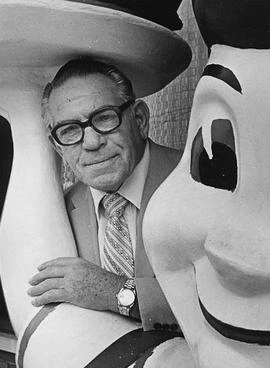
Based on available public data, including the Schoenbaum Family Foundation's reported net assets of roughly $15. 23 million, the documented value of prime Atlanta riverfront and downtown restaurant real estate, and comparable restaurant group sale multiples, a reasonable estimated range for Ray Schoenbaum's net worth as of May 2026 sits somewhere between $20 million and $50 million, with the foundation assets and investment holdings representing the most verifiable anchor point.
Who is Ray Schoenbaum? Getting the right person

Before you go digging for financial records, it's worth confirming you have the right Ray Schoenbaum, because the name appears in a few different contexts. The person this article covers is Raymond D. Schoenbaum, the Atlanta restaurateur and philanthropist. He is the son of Alex Schoenbaum, who founded the Shoney's restaurant chain, which gives him both a notable family business background and a separate personal career. Ray opened Ray's on the River on the bank of the Chattahoochee River in 1984, later added Ray's in the City in downtown Atlanta and Ray's at Killer Creek in Alpharetta, and ran all three under the Ray's Restaurants brand for about four decades.
He is also listed as treasurer of the Schoenbaum Family Foundation (IRS Form 990-PF filings identify him as Raymond D. Schoenbaum), and a February 2026 sponsorship announcement from Metro Atlanta CEO confirms the Ray Schoenbaum Family Foundation remains active. The Atlanta Jewish Times has profiled him specifically as the Ray's Restaurants founder, and Atlanta Downtown has quoted him directly in connection with renovations at Ray's in the City. Those three touch points together (the restaurant group, the foundation, and local Atlanta business press) let you confidently distinguish him from any unrelated professionals who share the name.
What net worth actually means here
Net worth is assets minus liabilities, full stop. For someone like Ray Schoenbaum, the asset side would historically have included: equity in the Ray's Restaurants LLC entities (operating businesses plus any owned real estate or leasehold improvements), assets held inside the Schoenbaum Family Foundation, personal real estate and property holdings in Georgia, liquid investments and brokerage accounts, and any proceeds from the 2024 restaurant sale net of taxes and transaction costs. The liability side would include business debt (restaurant buildouts and equipment financing are capital-intensive), any personal mortgage debt, and tax obligations triggered by the sale.
One important nuance: the Schoenbaum Family Foundation's roughly $15.23 million in net assets are technically not Ray Schoenbaum's personal wealth. Foundation assets are restricted for charitable purposes. But the foundation's size does signal the scale of wealth he has already moved into philanthropy, which helps calibrate the broader picture. Researchers looking at similar figures, such as those profiling Gary Sadoff or Roy Schoenberg as privately held business owners, run into the same issue: foundation assets are visible but legally separate from personal net worth.
The best public sources to check right now

Start with the sources that are free and reliably up to date. Here is what to pull and where to find it:
- ProPublica Nonprofit Explorer: Search for 'Schoenbaum Family Foundation' to access IRS Form 990-PF filings. These are the most verifiable numbers in the public record. They show total assets, net assets, investment income, and officer compensation. Raymond D. Schoenbaum appears as treasurer with $0 compensation in the extracted summary, which is typical for family foundation officers.
- Georgia Secretary of State eCorp Business Search: Search 'Schoenbaum' or 'Ray's Restaurants' to pull entity records for RAY'S RESTAURANTS, LLC, SCHOENBAUM FAMILY INVESTMENTS, LLC, and any related LLCs. Downloadable records show registered agents, filing dates, and status, which help you map the ownership structure.
- SEC EDGAR Search Filings: Use the keyword search tool at SEC.gov to check whether any Schoenbaum-related entity ever filed disclosures (relevant if any business had a public component or investor offering). Given the restaurants were privately held, this is a quick negative check rather than a source of positive data.
- County property records (Fulton County and Cherokee County, Georgia): Restaurant real estate and any personal property owned by Schoenbaum or his LLCs will appear here. Fulton County covers the Ray's in the City location; Cherokee County covers Alpharetta. Search by owner name and entity name.
- Restaurant Business Online and FOX 5 Atlanta reporting from April 2024: These are the primary credible media sources documenting the sale to TEI Hospitality. Neither disclosed sale price, but the coverage confirms the transaction and the buyer, which helps frame what was sold.
- Atlanta Jewish Times and Atlanta Downtown: Biographical context and direct quotes. Not financial data, but useful for confirming identity and career timeline.
How to estimate net worth when the sale price is missing
The biggest unknown here is the 2024 sale price for Ray's Restaurants. TEI Hospitality is a private, family-owned Kennesaw-based company, and neither party disclosed deal terms. That is common in private restaurant transactions. To work around it, you use industry valuation multiples and comparable sales as a proxy.
Fine-dining restaurant groups in the United States typically sell for 4x to 7x EBITDA (earnings before interest, taxes, depreciation, and amortization) for well-established, profitable concepts with strong brand recognition. Ray's Restaurants operated three locations with a 40-year track record, riverfront and downtown Atlanta real estate premiums, and name recognition in the Atlanta market. Even at the conservative end, a three-unit fine-dining group with those characteristics in a major metro could reasonably command somewhere between $8 million and $25 million depending on the lease versus own structure of the real estate and the trailing EBITDA.
Layer on the foundation's $15.23 million in net assets (a floor indicator for philanthropic transfers already made), any personal real estate, and investment assets, and you arrive at the $20 million to $50 million estimated range. The lower end assumes the restaurant sale was modest and most foundation assets represent the bulk of accumulated wealth already transferred. The upper end assumes a stronger sale price, retained investment assets, and personal property holdings that aren't yet visible in public records.
Why net worth numbers online often don't match

If you've already seen a number posted somewhere for Ray Schoenbaum's net worth, there are a few reasons it might look different from what you find when you do your own research. If you are specifically searching for Allen R. Adler net worth, it helps to treat any online number as unverified unless it is tied to documented assets or credible reporting. If you are specifically looking for Ross Adler net worth figures, treat them as unverified unless they cite the underlying assets and liabilities. If you are looking up axelrod net worth online, use the same approach to separate public, verifiable assets from private transaction gaps. The most common issues:
- Outdated snapshots: A figure posted before April 2024 would not account for the restaurant sale proceeds, which is the single largest liquidity event in his career. Any pre-sale estimate is now materially stale.
- Confusing foundation assets with personal wealth: Some aggregators include foundation net assets in a personal net worth figure, which inflates the number and is technically incorrect since those funds are restricted.
- No source for the business valuation: Many celebrity net worth sites assign a round number without showing the methodology. If there's no explanation of how the restaurant group was valued, treat the number skeptically.
- Name confusion: An unrelated Ray Schoenbaum in a different industry could have a number attached to his name that gets picked up and misattributed.
- Timing of tax obligations: Sale proceeds net of capital gains taxes can differ significantly from the gross sale price. Sites that use a gross figure overstate spendable net worth.
- Ignoring liabilities: Restaurant businesses carry real debt. Skipping the liability side and just summing assets produces an inflated figure.
Building and validating an updated net worth range, step by step
Here is the process I'd follow if I were updating this estimate today, starting from scratch with only public information.
- Pull the most recent Schoenbaum Family Foundation 990-PF from ProPublica. Note the total assets, net assets, and any investment income figures. This is your most reliable anchor. As of the last available filing, net assets were approximately $15.23 million.
- Run the Georgia eCorp business search for 'Schoenbaum' and 'Ray's Restaurants.' Download the entity records for SCHOENBAUM FAMILY INVESTMENTS, LLC and RAY'S RESTAURANTS, LLC. Check filing status (active vs. dissolved) and note any registered agent changes that might signal post-sale restructuring.
- Check Fulton County and Cherokee County property records for real estate owned by Schoenbaum personally or through his LLCs. Note assessed values and any liens or mortgages.
- Run a quick SEC EDGAR search for 'Schoenbaum' to confirm there are no public filings that would add or change the picture.
- Apply a conservative restaurant group multiple (4x to 5x EBITDA for a private sale) to estimate the business sale value. If you can find any comparable Atlanta fine-dining group transactions in trade press, use those as a benchmark instead of the generic multiple.
- Sum: estimated sale proceeds (net of estimated taxes at roughly 20 to 23.8% long-term capital gains rate) + foundation net assets (noted separately as non-personal) + estimated real estate equity + a conservative estimate for personal investments.
- Cross-check: Does the resulting range align with the philanthropic profile? A foundation with $15 million in assets typically reflects total wealth of at least 3x to 5x that amount at the time of major contributions, which would imply $45 million to $75 million in peak wealth. Discounting for distributions already made and post-sale taxes brings you back toward the $20 million to $50 million range.
- Document your assumptions explicitly: which multiple you used, what tax rate you assumed, whether you included foundation assets. This is what separates an estimate you can stand behind from a number pulled from thin air.
A quick look at the key data points
| Data Point | Source | Estimated Contribution to Net Worth |
|---|---|---|
| Ray's Restaurants sale (2024, undisclosed) | FOX 5 Atlanta, Restaurant Business Online | $8M–$20M (estimated, post-tax) |
| Schoenbaum Family Foundation net assets | ProPublica / IRS Form 990-PF | ~$15.23M (restricted, not personal wealth) |
| Schoenbaum Family Investments, LLC | Georgia eCorp | Unknown; possible investment vehicle |
| Personal real estate (GA) | County property records | Not yet quantified publicly |
| Personal investments / liquid assets | No public source | Estimated by proxy only |
How to read the final number and when to update it
The $20 million to $50 million range is an informed estimate, not a confirmed figure. The lower bound is grounded in the foundation's verifiable net assets plus a conservative restaurant sale value. The upper bound reflects what the full picture could look like if the sale commanded a premium multiple and personal investments are substantial. Treat any single round number posted without methodology as a starting point for your own research, not a conclusion.
This estimate should be revisited when new 990-PF filings become available for the Schoenbaum Family Foundation (typically posted 12 to 18 months after the tax year closes), if any Georgia LLC dissolution or restructuring filings appear post-sale, or if credible local business press (Atlanta Business Chronicle, Restaurant Business Online) reports additional details about the TEI Hospitality transaction. The April 2024 sale is the biggest open variable. If deal terms ever surface in litigation records, court filings, or a future profile of TEI Hospitality, that should immediately anchor the estimate more tightly.
For context, researchers working on similar privately held business-owner profiles, including those examining figures like Randol Schoenberg or Roy Schoenberg in different industries, face the same fundamental challenge: the most significant wealth event is a private transaction with no required public disclosure. If you are specifically comparing claims about Roy Schoenberg net worth, focus on whether they cite verifiable sale terms, filings, and asset records. If you are looking specifically for Randol Schoenberg net worth, the lack of disclosed deal details makes estimates highly dependent on what public records and comparable transactions you can verify. The methodology here (foundation assets as an anchor, industry multiples for business valuation, property records for real estate, and a disciplined separation of personal from philanthropic assets) is the same framework that applies across those cases.
FAQ
Can I use the Schoenbaum Family Foundation’s net assets as a direct measure of Ray Schoenbaum’s personal net worth?
Not directly. Foundation net assets reflect legally restricted charitable funds, not personal equity. You can use the figure as an anchor for how much wealth was transferred into philanthropy, but you should not subtract nothing and claim it equals his personal net worth.
Why do some websites list a single exact number for Ray Schoenbaum net worth, and why is that risky?
Most single-number listings do not disclose the underlying methodology, such as assumed restaurant sale value, any kept ownership stakes, or estimated liabilities. Without documented inputs, treat those numbers as placeholders and only trust figures tied to verifiable filings, property records, or credible reporting.
What is the biggest driver of the estimate for Ray Schoenbaum net worth, and what should I watch for next?
The biggest driver is the undisclosed April 2024 transaction value and how it was structured (cash versus retained interests) after taxes and transaction costs. Watch for later TEI Hospitality disclosures, credible local business coverage, or any court records that reveal deal terms.
How should I handle the possibility that Ray’s restaurants owned property versus leasing it?
Lease versus ownership changes valuation materially. If significant real estate was owned (or sold separately), a restaurant-group multiple alone may understate value, because real estate equity can add to the proceeds beyond EBITDA multiples.
Do tax effects from the 2024 sale materially change a net worth estimate?
Yes. A deal price does not translate 1-to-1 into net worth because capital gains taxes, transaction fees, and any debt payoffs reduce what ultimately becomes liquid or reinvested. Estimates that ignore tax and payoff structure can overstate the personal amount retained.
What liabilities should I include when estimating Ray Schoenbaum net worth from public information?
Include items that often sit outside easy headlines, like business debt tied to buildouts and equipment financing, mortgages on personal Georgia properties, and contingent liabilities that could be recorded after a sale. Even if you cannot quantify everything, you should not assume zero debt.
If Ray’s name appears on foundation forms, does that mean his personal wealth is higher than the foundation figure?
Not necessarily. Being treasurer or an officer explains governance, not ownership. His personal wealth could be higher due to investments and personal real estate, or lower if substantial proceeds were already transferred into restricted charitable vehicles.
How can I verify I’m looking at the right Ray Schoenbaum when researching net worth?
Confirm the middle initial and role: the relevant person is Raymond D. Schoenbaum, associated with the Ray’s Restaurants founder identity and Schoenbaum Family Foundation filings. Cross-check with Atlanta business profiles that specifically mention the restaurants and the foundation rather than unrelated professionals with the same name.
What types of public records are most useful to tighten the net worth range after the sale?
The highest value sources are updated 990-PF filings for the foundation, Georgia property records tied to any personal holdings, and any LLC restructuring or dissolution filings that reference Ray’s Restaurants entities post-transaction. These can reveal proceeds allocation and ownership changes more reliably than generic net worth lists.
Is it reasonable to treat the $20 million to $50 million range as a final number?
No. It is a range built around assumptions for an undisclosed private sale, so it should be treated as probabilistic. When new filing details or deal-specific information surfaces, you can narrow the range by updating only the changed inputs, especially the sale proceeds and any retained interests.