
Roy Halston Frowick, the legendary American fashion designer known simply as Halston, had an estimated net worth somewhere between $16 million and $25 million at the time of his death on March 26, 1990. The dramatically higher figures you'll sometimes see online, including a $100 million estimate that circulates on aggregator sites, are not grounded in documented estate records and almost certainly confuse the ongoing commercial value of the Halston brand with what Halston personally held when he died. His real financial story is more complicated, and more interesting, than any single number suggests.
Roy Halston Net Worth: Estimates, Methods, and Timeframe

Marcus Holloway
12 May 2026
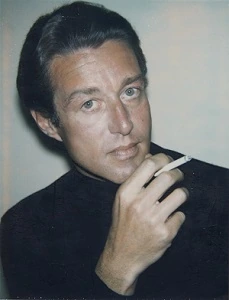
Who exactly is Roy Halston? Clearing up the confusion

It's worth being precise here because searches for 'Halston net worth' pull up a mix of results covering the man, the brand, and even the Netflix series. Ray Huber net worth is another example where brand-related numbers can get mixed up with personal wealth figures Halston net worth. Roy Halston Frowick was born on April 23, 1932, and built one of the most commercially powerful fashion empires of the 1970s and 1980s. He went by the single name Halston professionally. He died at age 57 from AIDS-related complications. The Halston brand, however, did not die with him. It has been bought, sold, licensed, and revived multiple times since 1990, and the ongoing commercial activity of that brand is regularly (and incorrectly) folded into articles about the designer's personal wealth. When you see a $100 million figure attached to Halston, you're almost certainly looking at a conflation of brand equity with personal net worth.
Roy Halston's estimated net worth: the low-to-high range
Working from the documented financial events in his life, a credible range for Halston's personal net worth at the time of his death is approximately $16 million on the conservative end and $25 million at the higher end. The $16 million figure appears on Net Worth List and aligns closely with one concrete data point we do have: the reported $16 million sale of his company to Norton Simon in 1973. For Roy Halston net worth, the more reliable starting point is this $16 million low-end estimate backed by the documented 1973 sale $16 million figure. That number represents something real. The $100 million figure cited by ExactNetWorth (framed as an 'as of 2022' estimate) is not an estate valuation or a documented figure tied to any financial disclosure. It almost certainly reflects either a brand-level valuation or a methodologically loose aggregation. There is no public probate record or estate document that supports it.
| Source | Estimate | Methodology Notes |
|---|---|---|
| Net Worth List | $16 million | General aggregator estimate; no methodology disclosed; aligns with 1973 sale price |
| ExactNetWorth | $100 million | Framed as 'as of 2022'; likely conflates brand value with personal estate; not estate-verified |
| This site's working estimate | $16M–$25M | Based on documented sale price, licensing era income, and post-firing financial position; excludes brand value post-death |
Where Halston's money actually came from
Halston's wealth was built primarily on three things: his couture business, a major corporate acquisition, and an aggressive licensing strategy that initially looked like genius before it destroyed his brand equity.
The couture business and early brand equity

Halston founded his couture house in 1968 and quickly became the designer of choice for celebrities, socialites, and Studio 54's inner circle. His minimalist, luxurious aesthetic made him a defining voice of 1970s American fashion. The business was profitable enough by 1973 that Norton Simon acquired it for $16 million in stock, with Halston staying on as principal designer. That acquisition price alone gives you a floor for understanding what his brand was worth at peak commercial momentum.
Licensing and the J.C. Penney deal
After the Norton Simon sale, Halston shifted into an era of aggressive licensing. The biggest and most consequential move was a reported six-year contract with J.C. Penney signed around 1982, a deal reportedly valued at $1 billion over its term. On paper, this was a massive revenue event. In practice, it triggered a backlash from luxury retailers, most notably Bergdorf Goodman, who dropped his high-end line almost immediately. The short-term licensing income was real, but the long-term cost to the brand, and to Halston's personal control over it, was severe. Halston did not personally pocket the bulk of the licensing revenue since Norton Simon (later Esmark, then Beatrice Companies) owned the company by then and controlled those financial flows.
Fragrance royalties

Halston's fragrances, particularly the original Halston perfume launched in the 1970s, were significant contributors to brand revenue. Fragrance licensing deals often include royalty streams paid to the name licensor, and given that Halston had already sold the company, the structure of any personal royalty income he received is not well-documented in public sources. Fragrance remained a core revenue driver for the brand long after his death, with corporate owners from Revlon onward continuing to monetize it.
The financial turning points that shaped his wealth
Halston's financial timeline has several sharp inflection points that you need to understand to make sense of any net worth estimate.
- 1968: Founded his own couture house, establishing the business that would become the Halston brand.
- 1973: Sold the company to Norton Simon for approximately $16 million in stock. Retained his role as principal designer but lost ownership.
- 1982: Signed the J.C. Penney contract, an unprecedented mass-market move that Britannica describes as having 'severely damaged his career' by alienating luxury retail partners.
- 1984: Was fired by the corporate owners (by then Esmark/Beatrice Companies), losing his design role and his professional platform.
- Late 1980s: Attempted to buy back the rights to his own name and business, an effort that ultimately failed. This attempted buyback represents a probable personal financial drain.
- 1990: Died on March 26 at age 57, with the brand he built under corporate ownership he had no stake in.
- 1992: Revlon completed its acquisition of the Halston business, including trademarks and licenses, two years after his death. This transaction is entirely post-Halston and unrelated to his personal estate.
- 2010s onward: Xcel Brands acquired the Halston and Halston Heritage trademarks in a modern licensing/acquisition structure. Again, zero connection to the original designer's estate.
What reduced his wealth: debts, losses, and lost control
Several factors worked against Halston's personal financial position in the final decade of his life. After being fired in 1984, he had no salary or designer contract income from the company bearing his name. His attempt to repurchase the brand rights was reportedly expensive and unsuccessful, meaning he spent money on legal and negotiation costs without recovering the asset. He had maintained a lifestyle consistent with his peak-era status, including a prominent New York townhouse that Architectural Digest has documented. Maintaining high-profile real estate in New York through a period of diminished professional income creates obvious financial pressure. He also faced significant medical costs in his final years as his health declined. None of these costs are precisely documented in public records, but they are consistent with the gap between his peak earning power (mid-1970s through early 1980s) and a more modest estate at death.
Why the estimates vary so much
The wide gap between $16 million and $100 million comes down to three problems that are common across celebrity net worth research, and Halston is a particularly clear example of all three. If you're looking for a specific figure like "andre hoffmann net worth," this is the same kind of confusion between personal wealth and broader commercial branding that often distorts online estimates.
Peak net worth vs. net worth at death
Halston's peak commercial influence was in the mid-1970s, when he was the face of American luxury fashion, had just sold his company for $16 million, and was generating substantial income. By 1990, he had been fired from his own brand six years earlier, had failed to reacquire it, and was dealing with serious health issues. These are very different financial situations, and aggregator sites frequently blur the two by presenting a single 'net worth' figure without specifying the time period.
Brand value vs. personal estate
The Halston brand has generated substantial commercial value since 1990 through multiple ownership and licensing structures, Revlon, Xcel Brands, and others. That value has nothing to do with Roy Halston Frowick's personal estate. When sites cite $100 million 'as of 2022,' they are almost certainly reporting a brand or trademark valuation, not an individual's net worth. This is a genuine methodological failure, and it's why you should treat any figure above roughly $25 million for Roy Halston personally with significant skepticism.
No public probate or estate record
There is no widely publicized probate filing or estate valuation for Roy Halston Frowick that has been independently verified in accessible public records. For estate matters, readers can start with the New York County Surrogate’s Court entry point on the official New York Courts site. Without that anchor, all estimates are extrapolations from known financial events, not documented totals. That's fine, but it means every figure you see, including ours, carries uncertainty and should be treated as an informed estimate rather than a confirmed number.
How to verify and update Halston's net worth yourself
Since Halston died in 1990, his 'net worth' is a historical question rather than a live one. If you are specifically looking for the ray halbritter net worth claim, focus on how the numbers are sourced and whether they reflect personal assets or a brand valuation Halston net worth. Here's how to approach it rigorously.
- Start with documented transactions: The $16 million Norton Simon sale in 1973 is the most concrete financial data point. Use it as a baseline, then adjust for income earned and capital consumed between 1973 and 1990.
- Check probate records: If you want to go deep, search New York County Surrogate's Court records for estate filings under 'Roy Halston Frowick.' This is the most direct source for actual estate valuations and is accessible through court record databases.
- Use Britannica and the LA Times obituary as identity anchors: Both confirm the full name, birth date (April 23, 1932), and death date (March 26, 1990). Use these to filter out any 'net worth' articles that might be covering a different person or a confused timeline.
- Treat aggregator sites as starting points, not endpoints: Sites like ExactNetWorth and Net Worth List aggregate without rigorous sourcing. They're useful for getting a quick number to investigate, but the $100 million figure in particular requires healthy skepticism given the lack of supporting documentation.
- Distinguish brand-level news from personal wealth news: SEC filings (such as Revlon's 10-K filings listing Halston trademarks) and corporate press releases (such as Xcel Brands' acquisition announcements) describe brand asset values, not what Roy Halston personally owned. Keep these mentally separate.
- Check for any updated biographical research or estate disclosures: Occasionally, biographers or documentary filmmakers surface new financial details. The Netflix series 'Halston' (2021) renewed public interest and may have prompted new archival research worth tracking.
What his net worth actually tells us
A working estimate of $16 million to $25 million at death is a reasonable, evidence-grounded range for Roy Halston's personal net worth. In 1990 dollars, $16 to $25 million represents significant wealth, roughly equivalent to $38 to $60 million in 2026 purchasing power. But it also reflects a story of lost control: a designer who built something worth far more than that, sold it at what turned out to be a strategic disadvantage, and spent the final years of his career fighting to reclaim a brand that had moved beyond his reach. The financial arc is as much about what he lost as what he accumulated.
His case is also a useful reminder that a person's name and a brand are not the same financial asset. The Halston trademark continues to generate revenue today through multiple ownership structures that have no relationship to his estate. Anyone researching celebrity net worth, whether for Halston or for any figure whose name became a commercial brand, should apply the same filter: separate what the person owned from what the brand is worth now. To get a better sense of Roy Halston's rick edward hoffman net worth numbers and why they spread online, it helps to separate documented personal assets from later brand valuations celebrity net worth. That distinction is what separates a useful estimate from a misleading headline number.
FAQ
Why do some websites list Roy Halston net worth as $100 million or more?
Those higher figures usually mix two different things: the later commercial value of the Halston brand (trademarks, licensing, and ownership deals) and Halston’s personal assets at death. Without an independently verifiable estate or probate valuation, it is not possible to treat an “as of” brand valuation as his personal net worth.
What does the $16 million figure actually represent for Roy Halston net worth?
It aligns with a specific documented transaction, the reported $16 million sale of Halston’s company to Norton Simon in 1973. That is best treated as a floor for his personal wealth during the peak business era, not as a guarantee that his net worth was still the same level in 1990.
Should I adjust Roy Halston net worth for inflation when comparing figures?
Yes, if you are comparing the $16 million to modern “as of” numbers. The article notes 1990 dollars roughly translate to about $38 to $60 million in 2026 purchasing power, which helps you avoid thinking a historical figure is “too small” or misreading newer aggregator estimates.
How can brand licensing affect Roy Halston’s personal wealth after he sold his company?
Licensing revenue tied to the Halston name does not automatically mean Halston personally received the royalties. After the company was acquired, subsequent owners typically controlled the cash flows, so the brand could become more valuable while his personal financial position weakened.
If Halston had big licensing deals like the J.C. Penney contract, why might his estate still be around $16 million to $25 million?
A high headline deal value can be distributed across multiple parties and structures (owner, licensor, retail partner, and channel). If he no longer owned the operating company or trademark rights, he may have received limited or no direct proceeds, and his personal costs (legal issues, living expenses, medical bills) could have consumed a large portion of whatever income he did retain.
Is there any public probate record that confirms Roy Halston’s net worth at death?
In accessible sources, there is no widely publicized probate filing or independently verified estate valuation that cleanly confirms a single net worth number. That is why credible research tends to anchor on known financial events and then infer a reasonable range rather than claim a precise total.
Why do “net worth” numbers sometimes get confused with other fashion-related names online?
Because people search the designer’s name, then sites loosely combine unrelated figures (for example, using brand revenue or other executives’ wealth claims). This is especially common when an individual’s name is also a trading brand, and the site fails to state whether the number refers to the person or the trademark.
What is the safest way to interpret Roy Halston net worth figures I see online?
Treat numbers above roughly $25 million as suspect unless they clearly explain the method and time period and distinguish personal assets from brand valuation. The more the source resembles an “aggregate” without an estate anchor, the more likely it is to be mixing brand equity with personal net worth.
Could Roy Halston’s lifestyle and medical costs have lowered his net worth by 1990?
Yes. The article describes a gap between peak earning years and later circumstances, including living costs consistent with earlier status and significant medical expenses near the end of his life. Those categories can materially reduce an estate even if earlier business outcomes were strong.
If I want to estimate Roy Halston’s personal assets, what should I separate first?
Start by separating ownership of operating businesses and personal holdings from later trademark and licensing value. A trademark can generate large income after death, while the person’s estate may be much smaller if they no longer controlled those rights.