
Steve Witkoff's net worth is currently estimated at around $2 billion, based on Forbes' May 2025 snapshot. Lauren Rappoport is his wife, not a separate financial subject, though her legal career is part of the public record. If you searched for both names together, you were most likely looking for Steve Witkoff's wealth profile with his wife's name attached for context. This article breaks down both identities, the best-supported figures, and exactly how those figures were arrived at.
Steve Witkoff net worth and Lauren Rappoport details

Marcus Holloway
27 Mar 2026
Who Steve Witkoff and Lauren Rappoport are

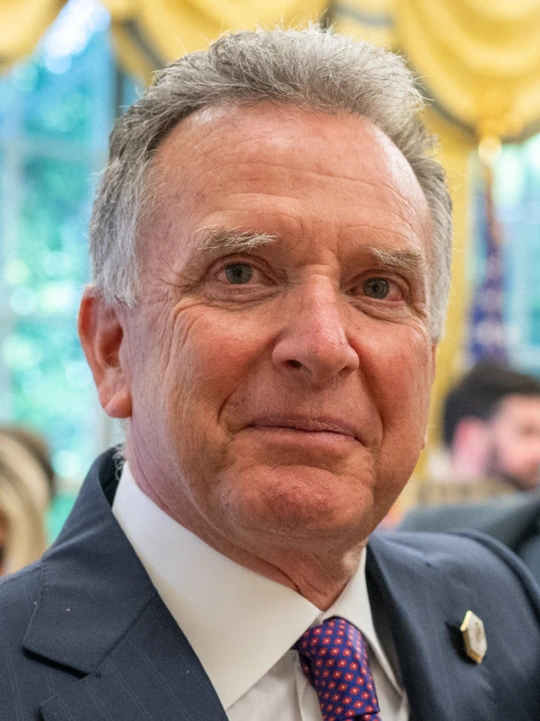
Steve Witkoff is a New York-based real estate developer and investor who built his career over four decades in commercial and residential property. He co-founded Stellar Management in 1985 alongside lawyer Larry Gluck, then launched his own firm, the Witkoff Group, in 1997 in New York. As of his most recent public filings, he holds the title of President and Chief Investment Officer at the Witkoff Group. Beyond real estate, he gained a high-profile government role: he served as Special Envoy to the Middle East for the U.S. Department of State starting in January 2025, and his OGE Form 278e (the mandatory public financial disclosure for federal appointees) lists his updated title as "Assistant to the President and Special Envoy for Peace Missions" with an appointment date of June 2025.
Lauren Jill Rappoport is Steve Witkoff's wife. They married in 1987. Public records identify her as a lawyer, and biographical sources note she was formerly an associate at the New York law firm Botein, Hays & Sklar. blank" rel="noopener noreferrer">Martindale.com provides an attorney directory listing for Lauren Jill Rappoport. She appears in New York state court attorney address records under the name Lauren Jill Rappoport, and lawyer directory listings carry her name as well. She is also identified in public sources as the mother of Zach Witkoff, Steve's son. Wikipedia’s biography on Zach Witkoff identifies Lauren Rappoport as Steve Witkoff’s wife and the mother of Zach Witkoff, providing biographical context for their family relationship. Lauren Rappoport does not appear in the Witkoff Group's published leadership or people directory in a professional capacity.
Why both names show up in the same search
When people search "Steve Witkoff net worth Lauren Rappoport," they are almost always looking for Steve Witkoff's financial profile and have simply included his wife's name because she appears alongside his name in biographical write-ups. This is a common pattern in wealth research: people encounter a spouse's name in an article and include it in their search query without intending to research the spouse separately. There is no known financial entity, joint business venture, or investment vehicle publicly attributed to Lauren Rappoport independent of Steve Witkoff's holdings. The connection is biographical, not financial, at least based on available public records.
That said, if you were specifically trying to find Lauren Rappoport's individual net worth, that figure is not publicly documented. She has no public profile as a businessperson or public figure in her own right, and no credible source has published an independent net worth estimate for her. As Steve Witkoff's spouse, she may share in marital assets under New York law, but that is a legal question distinct from a documented personal net worth figure.
Steve Witkoff's net worth: the current best estimate

The most widely cited headline figure is $2 billion, as of Forbes' May 2025 estimate. If you are searching for Steven Nerayoff net worth specifically, you will usually need to rely on similarly sourced third-party wealth estimates and verify the latest disclosures. If you are specifically looking for Steven Raichlen net worth, you will typically need to rely on the same kind of third-party wealth estimates and sourcing checks discussed here for Witkoff. That figure comes from Forbes' ongoing real-time net worth tracking, which they update based on changes in asset values, public filings, and market conditions. Wikipedia cites the same Forbes figure with the May 2025 timestamp. Bloomberg's Billionaires Index has also been referenced in reporting on Witkoff around the time of his White House appointment and divestiture coverage, though Bloomberg's specific figure for him has not been independently published at the same level of detail as Forbes.
The Real Deal, a trade publication that covers commercial real estate closely, reported that Witkoff's public financial disclosure listed assets worth at least $350 million. That number is lower than the Forbes $2 billion figure, and the gap is not a contradiction: public financial disclosures only require reporting above certain thresholds and do not capture full asset values or net equity in private holdings. The $350 million figure represents the minimum visible floor from the disclosure, not a ceiling or a complete picture.
Lauren Rappoport's net worth
No credible independent net worth estimate exists for Lauren Rappoport. She is identified in public records as a licensed attorney in New York with prior association at a New York law firm, but she has not been the subject of any financial profile by Forbes, Bloomberg, or any comparable outlet. Without documented income sources, business interests, or independently held assets in the public record, it would not be responsible to assign her a standalone net worth figure. If you want to compare estimates like what you might see in a steven rinella net worth search, note that hers still lacks documented income sources, business interests, or independently held assets in the public record. If your search intent was specifically about her financial standing, the honest answer is: that information is not publicly available.
How the $2 billion estimate is calculated

Forbes calculates net worth for private individuals by estimating the value of all known asset categories, including private equity stakes, real estate holdings, publicly traded securities, and other investments, then deducting known debt. For someone like Witkoff, whose primary wealth sits in privately held real estate entities, Forbes uses comparable-company valuations and transaction data to estimate the value of those stakes. Bloomberg's methodology, which is comparable for billionaire-level subjects, applies similar logic: for closely held companies, it uses valuation multiples and comparable sales, then accounts for debt pledged against assets.
Witkoff's OGE Form 278e provides the most concrete public anchor. The disclosure shows "The Witkoff Group LLC" with a disclosed value of "Over $50,000,000" and documents divestiture proceeds of $120,000,000 related to a stake sale tied to his government ethics obligations. It also discloses "Witkoff Holdings LLC" with a value of "Over $50,000,000" and distributions of $34,363,535, plus "22 East 60th Street LLC" with distributions of $1,218,905. These are threshold-based disclosures, not full valuations, so the actual equity positions are likely larger. The $120 million in stake-sale proceeds alone is a meaningful data point that supports a net worth well above $350 million.
There is also a crypto dimension. Forbes has reported that the Witkoff family holds an estimated 6.4% interest in World Liberty Financial, the Trump-affiliated cryptocurrency project. Crypto holdings fluctuate significantly, so their contribution to the net worth estimate can shift materially in either direction depending on when the snapshot is taken.
The main drivers of Witkoff's wealth
- The Witkoff Group: The core real estate development and investment firm he founded in 1997. It has been involved in large-scale commercial, hotel, and residential projects across major U.S. markets. Witkoff's equity stake in the firm is the single largest driver of his estimated net worth.
- Real estate holding entities: Multiple LLCs documented in his OGE disclosure (Witkoff Holdings LLC, 22 East 60th Street LLC, and others) generate ongoing distributions, suggesting active income from property ownership and management.
- Divestiture proceeds: As part of his government ethics obligations, Witkoff sold a stake in the Witkoff Group for $120 million. That transaction is documented in his public financial disclosure and represents a concrete, realized cash event.
- World Liberty Financial stake: The family's approximately 6.4% interest in Trump's crypto venture is a more speculative and volatile component. Its value depends heavily on the project's token performance and market conditions at any given time.
- Prior ventures: The co-founding of Stellar Management in 1985 with Larry Gluck preceded the Witkoff Group and likely contributed to the foundation of capital he deployed into later deals.
- Securities and investment entities: SEC filings show Witkoff was identified as a manager/member of WW Investors, LLC, which held beneficial ownership of shares in New York REIT (NYRT). This documents public markets exposure through entity structures, a common approach for private real estate investors.
Why the estimates vary and how to judge credibility
The gap between sources, $350 million in disclosed floor assets versus a $2 billion headline estimate, comes down to the difference between what is legally required to be reported and what actually exists. OGE disclosures are designed for conflict-of-interest identification, not wealth assessment. They use value buckets ("over $50,000,000" is the top disclosed tier, with no upper bound), exclude certain asset types, and do not require filers to disclose debt, which means you cannot calculate net equity from the disclosure alone. A property worth $300 million with $250 million in debt would appear the same as one with no debt in that disclosure format.
Forbes and Bloomberg build their estimates by going beyond disclosures, using interviews, industry contacts, comparable transaction data, and modeling. That process is more complete, but it still involves estimation for private holdings. Both outlets acknowledge they may undercount wealth in private structures because valuations of privately held real estate and LLC interests are not transparent in the way publicly traded stock prices are.
To evaluate the credibility of any net worth figure you encounter for Steve Witkoff, a few practical checks help. First, look at whether the source names its methodology. Forbes and Bloomberg both publish methodology pages explaining their approach. A site that just states a number without sourcing is a red flag. Second, check the date of the estimate. Witkoff's financial situation changed materially in 2025 due to his government role, divestiture, and the crypto stake, so older figures from 2023 or 2024 are likely outdated. Third, look for anchor data points: the $120 million divestiture proceeds and the disclosed distributions from holding entities are verifiable through the OGE Form 278e, which is a public government document you can access directly.
How to track the most current figures
Steve Witkoff's net worth is not a stable number. If you are also looking up Dr. If you are trying to find <a data-article-id="8F3CAABB-8865-440A-9C6C-E7C0BD40EFB8">Steve Witkoff net worth, follow the same rule: prioritize clearly sourced updates and verify them against recent disclosures and reputable estimates. Steven Bloch net worth</a>, the same approach applies: rely on clearly sourced estimates and check for updated disclosures. If you are looking for Steven Raichlen net worth specifically, focus on similarly sourced estimates and check for the most recent updates Steven Bloch net worth. His real estate portfolio, crypto holdings, and ongoing government role all introduce variability. The most practical approach is to check Forbes' profile page for his real-time net worth figure, which is updated as asset values change. For government-specific disclosures, the OGE's public disclosure database is searchable and will be updated if Witkoff files an amended or annual disclosure. The Real Deal and Bisnow are the two trade publications most likely to report on significant Witkoff Group transactions, which would affect the underlying asset valuations. If there is a major deal, sale, or market event tied to his holdings, those outlets typically cover it within days.
For Lauren Rappoport specifically, there is no equivalent tracking resource because she has no documented public financial profile. If you are looking for the same kind of wealth estimate that often appears with Steve Witkoff, keep in mind that Lauren Rappoport's net worth is not publicly documented either, so attribution claims are usually not verifiable. If that changes and she becomes a public figure in her own right, Forbes, Bloomberg, or similar outlets would be the places to check. For now, the most accurate statement is that her net worth is not publicly documented, and any figure you see attributed to her independently should be treated with skepticism unless it comes with a clear source and methodology.
A quick comparison of the key figures

| Source | Estimate / Figure | What it covers | Reliability |
|---|---|---|---|
| Forbes (May 2025) | $2 billion | Total estimated net worth, all asset types minus debt | High — named methodology, third-party reporting |
| OGE Form 278e (2025) | $350M+ in disclosed assets | Minimum disclosed asset floor, excludes unlisted holdings and debt | Factual but incomplete by design |
| Divestiture proceeds (OGE) | $120 million | Confirmed stake sale in The Witkoff Group LLC | Verified — government disclosure document |
| Witkoff Holdings LLC distributions (OGE) | $34.3 million (distributions) | Income from one disclosed holding entity | Verified — government disclosure document |
| Bloomberg Billionaires Index | Referenced but not separately confirmed | Comparable methodology to Forbes for billionaire estimates | High in methodology, but specific figure not independently published |
| Lauren Rappoport | Not publicly documented | No financial profile exists as a separate public figure | N/A |
If you are researching other high-profile individuals with complex wealth profiles built across business ventures and investments, the same methodology principles apply: anchor to government disclosures where available, rely on Forbes or Bloomberg for overall estimates, and treat unsourced figures with caution. If you are comparing other public wealth profiles, you may also want to look at steven van rijswijk net worth as a related example of how these figures are sourced. Steven Royzenshteyn's net worth is another example of a private-sector figure where disclosed records and industry estimates have to be read together to get an accurate picture.
FAQ
Why do searches for “Steve Witkoff net worth Lauren Rappoport” show results about Steve instead of Lauren?
Because Lauren Rappoport is mainly referenced as Steve Witkoff’s spouse in public write-ups, not as an independently tracked financial subject. Wealth estimators and major business outlets typically assign net worth profiles only to people with documented assets or public business roles.
Is it possible to estimate Lauren Rappoport’s net worth from Steve Witkoff’s filings?
Not accurately. Even if they share marital assets, the filings you can access reflect Steve’s disclosed holdings and thresholds, and they do not provide a split of ownership or equity between spouses for net-worth modeling.
Do OGE Form 278e disclosures let you calculate net worth for Steve Witkoff?
No. The disclosure provides value buckets (for example, “over” a threshold) and focuses on conflict-of-interest and ethics issues. It generally does not include full debt details, so you cannot compute net equity from it alone.
How should I interpret the difference between the Forbes headline number and the smaller disclosed asset floor (like $350 million)?
Treat the smaller disclosure figure as a minimum visible amount, not a ceiling. The gap can come from threshold reporting, assets that are excluded from certain disclosure categories, and the fact that government disclosures are not designed to reflect total valuation or net equity.
What’s the most reliable “anchor” document for Steve Witkoff’s wealth during 2025?
His OGE Form 278e filings, because they document specific divestiture proceeds and distributions, such as large stake-sale proceeds tied to ethics requirements. Use them as fixed datapoints, then compare to Forbes or Bloomberg for the full modeled estimate.
If Forbes updates a real-time net worth, how often can the number change for someone like Witkoff?
It can change quickly around events that affect valuation inputs, such as real-estate transaction announcements, divestitures, and crypto price swings. That means an older estimate can be materially different even if no new filings were published.
Are crypto holdings likely to be a major factor in the Witkoff estimate?
They can be, especially if the estimate includes a percentage stake that is large relative to his other assets. Crypto values are highly volatile, so the contribution can move up or down substantially between snapshots.
Could an “attributed” net worth figure for Lauren Rappoport be accurate even if it lacks a credible source?
It might be, but without documented methodology and verifiable underlying assets, it’s not something you can trust. A credible figure should tie back to named holdings, filings, transactions, or a published valuation methodology.
What are common mistakes people make when researching net worth of individuals with private LLCs and real estate?
People often assume disclosures include complete valuations and debt, or they treat threshold buckets as exact totals. Another common error is using a single outlet’s number without checking the date and whether the outlet explains its valuation method.
Where should I look first if I want the most current Steve Witkoff net worth figure?
Start with the latest real-time tracker from Forbes for the headline estimate, then cross-check the most recent OGE disclosure for “what changed” (divestitures, distributions, or updated entity values). That combination helps distinguish valuation modeling from fixed, documentable events.