
As of June 2026, Florin Răducioiu's estimated net worth sits in the range of $4 million to $6 million. That figure is built primarily on his professional playing career across top European leagues in the 1990s, augmented by transfer fees, post-retirement roles, and a handful of documented brand partnerships. It is not a precise balance sheet, no public financial filing exists for him, but it is a reasonable, evidence-grounded range, and this article walks through exactly how it is constructed.
Florin Răducioiu Net Worth Estimate and How It’s Calculated

Marcus Holloway
7 Jun 2026
Who Florin Răducioiu is and why his finances are estimable

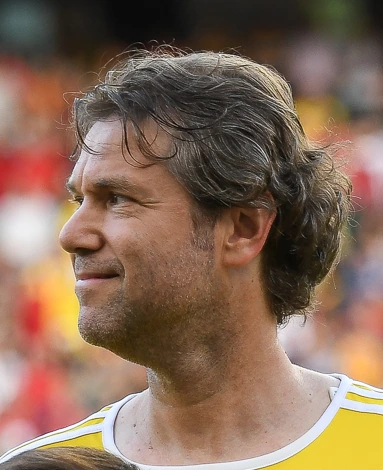
Florin Răducioiu is a Romanian former professional footballer, born in 1970, who played as a striker for clubs including Dinamo București, Verona, Bari, AC Milan, Espanyol, AS Monaco, West Ham United, and Brescia across a career that peaked in the 1990s. He represented Romania at the 1994 FIFA World Cup, one of the strongest Romania squads ever, and at UEFA Euro 1996. After retiring from playing, he moved into coaching and football administration, including stints as manager of the Romanian national youth teams and as team manager at Dinamo București during the club's insolvency period.
His financial situation is estimable (though not perfectly transparent) for a few reasons. His playing career involved transfers and contracts at clubs in Serie A, the Premier League, and Ligue 1 during an era when salary information was increasingly reported in sports media. Transfer fees associated with his moves have been partially documented, ProSport, for example, reports a $3,000,000 fee linked to his Dinamo-to-Bari transfer.
His post-playing income has also been reported in pieces: ProSport documented that he accepted a symbolic €1,500 per month salary as Dinamo's team manager during insolvency. More recently, GSP (Gazeta Sporturilor) reported a brand ambassador role with Autoklass and a partnership with Superbet. These data points, combined with industry benchmarks for the leagues and eras he played in, make a reasonable estimate possible.
Leonidas Raisini net worth is often estimated in a similar way, using publicly reported income and benchmark assumptions when exact filings are unavailable.
The net worth estimate: range, confidence level, and key drivers
The central estimate of $4 million to $6 million reflects the cumulative career earnings from roughly a decade of professional football across top European leagues, minus estimated living expenses, taxes, and the typical financial drag of the post-playing years. The lower bound assumes conservative salary figures for the early Italian league years and moderate spending. The upper bound assumes he preserved a meaningful portion of peak-era earnings, particularly from his Milan and Monaco stints, which likely carried the highest compensation of his career.
The biggest driver of this range is the playing career itself. Secondary drivers, coaching salaries, media work, ambassador roles, add modest incremental value but do not materially move the needle at this level. If you are specifically trying to understand Loren Răducioiu net worth, these secondary income streams are part of the broader earnings picture behind the range. The Autoklass and Superbet partnerships are financially relevant but their terms are not publicly disclosed, so they are treated as supportive rather than primary inputs. The key uncertainty is how well Răducioiu managed and preserved wealth accumulated during the 1990s, a common variable among footballers of his era.
Where the money came from: career earnings and beyond
Playing contracts and transfer fees
Răducioiu's playing career spanned the late 1980s through the early 2000s. His most financially significant years were almost certainly at AC Milan and AS Monaco in the mid-1990s. Transfermarkt’s AS Monaco transfers page for the 1993 season provides historical transfer records that can be used to validate Monaco-era move details for Răducioiu [AC Milan and AS Monaco in the mid-1990s](https://www. transfermarkt.
co. uk/as-monaco/transfers/verein/162/saison_id/1993). Serie A salaries for impact strikers during this period typically ranged from $500,000 to over $2 million per year depending on status and club resources. While we do not have a contract copy, a player of Răducioiu's caliber, 21 goals for Romania, World Cup quarter-finalist, signed by AC Milan, would have commanded compensation toward the upper end of the mid-tier range.
The $3,000,000 transfer fee reported for his Dinamo-to-Bari move is a concrete anchor point, and it tells you something about how his market value was perceived early in his career.
His time at West Ham United in the Premier League (1996) was brief, and Premier League salaries at that time, while growing, were not yet at the explosive levels of the 2000s. His later stints at Espanyol and Brescia were likely lower-compensation arrangements as he moved toward the end of his playing career.
Post-playing income: coaching, administration, and media
After retiring, Răducioiu held roles including manager of Romania's U15 national team (documented on Transfermarkt's trainer profile with appointment dates) and team manager at Dinamo București. The Dinamo role came with a reported salary of €1,500 per month, a symbolic figure that he accepted publicly, given the club's financial difficulties. These administrative roles are not wealth-building income streams; they are more likely passion-driven or reputation-building commitments.
More financially interesting is his role as coordinator for the Real Madrid Foundation, reported by ProSport. The compensation for such positions is typically not disclosed, but foundation coordinator roles at major clubs can carry meaningful annual salaries when tied to commercial or development programs. His ambassador role with Autoklass and the reported multi-year partnership with Superbet (as documented by GSP) represent the most commercially oriented income streams of his post-playing life. Romanian brand ambassador deals for a figure of Răducioiu's local prominence can range from nominal arrangements to deals worth tens of thousands of euros annually, but without disclosed terms, this remains an estimate.
Media appearances and commentary

Sport.ro coverage and related media indicate Răducioiu maintains an active media presence, including interviews and football commentary. Appearance fees for former international footballers in Romanian media are generally modest, in the range of a few hundred to a few thousand euros per engagement, and represent supplementary rather than primary income. Because many readers search for the average radiologist net worth, it is worth remembering that these figures vary widely by specialty, experience, and geography.
Assets and lifestyle: what we can say versus what we are guessing
No verified property holdings, vehicle ownership records, or investment portfolio details are publicly available for Florin Răducioiu as of June 2026. A UK company director record exists for a "Mrs Elena Andreea Raducioiu" linked to a company called Premier Homecare North Wales Ltd, but this is not Florin Răducioiu personally and should not be treated as evidence of his assets or business interests. It is worth noting only as a reminder to cross-check corporate records carefully before attributing them to the right individual.
What lifestyle indicators do exist are consistent with comfortable but not ultra-high-net-worth living. His media presence in Romania, brand ambassador roles, and continued involvement in football administration suggest someone who remains professionally active and financially stable, without signs of either significant wealth accumulation beyond his playing career peak or financial distress. If you are also comparing with other former footballers’ wealth snapshots like Andre Radandt net worth, the same idea applies: most numbers depend on reported income events and careful assumptions rather than verified filings. The €1,500/month Dinamo salary accepted during insolvency, while symbolic, also suggests someone who was not dependent on that income, which is itself a mild indicator of financial adequacy from prior earnings.
| Asset/Income Category | Status | Estimated Contribution |
|---|---|---|
| Playing career earnings (1990s) | Verified career, salary estimated from era/league benchmarks | Primary driver — $3M–$5M cumulative gross |
| Transfer fees received/associated | Partial — $3M Dinamo-to-Bari fee documented by ProSport | Contextual indicator, not direct income to player |
| Post-playing coaching/admin roles | Verified roles; Dinamo salary of €1,500/month documented | Minimal — supplementary income |
| Real Madrid Foundation coordinator role | Verified role (ProSport); compensation undisclosed | Uncertain — possibly meaningful |
| Autoklass/Superbet brand partnerships | Roles documented by GSP; deal values undisclosed | Estimated low-to-mid annual contribution |
| Property/investments | No public records available | Unverifiable — treated as unknown |
| Media/TV appearances | Active media presence documented | Supplementary — modest |
How this estimate is calculated

Net worth estimates for retired athletes like Răducioiu are built through a reconstruction process, not a balance sheet. The methodology used here involves five steps.
- Career earnings reconstruction: Use club-by-club playing history (sourced from Transfermarkt, Sky Sports, and Sofascore for appearance/club data) alongside known salary benchmarks for the relevant leagues and seasons. For Serie A in the early-to-mid 1990s, striker salaries at top clubs typically ranged from $600,000 to $2.5 million annually. For the Premier League circa 1996, comparable figures ranged from £500,000 to £1.5 million per year.
- Transfer fee contextualization: Transfer fees (like the $3M Dinamo-to-Bari figure) are not player income but they serve as market value anchors that help calibrate what salary contracts would have been negotiated at. Higher transfer fees generally correlate with higher wages.
- Post-career income overlay: Document confirmed post-retirement roles and apply known or industry-standard compensation ranges. For Răducioiu, this means accounting for the €1,500/month Dinamo salary, the undisclosed Real Madrid Foundation role, and brand partnerships.
- Deductions and adjustments: Apply estimated tax rates (Italy had top marginal rates of 45–50% in the 1990s; Romania's rates are lower), agent fees (typically 5–10% of contract value), and estimated living costs over a multi-decade post-career period.
- Range construction: The result is expressed as a range rather than a single figure, with the lower bound reflecting conservative earnings assumptions and higher-than-average post-career expenditure, and the upper bound reflecting stronger peak earnings and better wealth preservation.
This is the same general methodology used by professional net worth estimation sites. The key difference between a credible estimate and a random number is transparency about inputs and assumptions, and an honest acknowledgment that without tax returns, property registries, or investment disclosures, every figure is an informed approximation.
What could change this estimate over time
Several things could cause this estimate to move meaningfully in either direction. On the upside, a disclosed significant business venture or investment (particularly in real estate or football-related commercial activities) would push the number higher. Any formal coaching appointment at a well-funded club would do the same, since senior coaching contracts can be worth several hundred thousand euros annually at major European clubs. An expanded brand partnership portfolio, building on the Superbet relationship or adding similar commercial deals, could add to annual income in ways that compound over time.
On the downside, post-retirement financial difficulty is not uncommon among footballers of Răducioiu's era, and if any such issues became public, they would require a downward revision. Exchange rate movements also matter here: a significant portion of any wealth preserved from his Italian career would have been denominated in lira (pre-euro), and the transition to euro-era values involved its own adjustments. There is no specific evidence of financial difficulty for Răducioiu, but this is a standard risk factor worth noting for the methodology.
Coaching timeline updates on Transfermarkt's trainer profile are a practical trigger for re-evaluating the estimate. Any new role appointments, or departures from current roles, that become public would feed directly into the income overlay component of the calculation. Similarly, if the Superbet or Autoklass partnership terms were ever disclosed or reported, those figures would replace current assumptions with harder data.
How to verify this and what to check
If you want to stress-test this estimate or look for updates, here is where to look and what to look for.
- Transfermarkt (transfermarkt.com): Check both the player profile and the trainer profile for Florin Răducioiu. The player profile gives you transfer history, clubs, and seasons with appearance data — all useful for reconstructing career earnings. The trainer profile shows current and past coaching/administrative roles with dates, which is the most reliable indicator of whether his post-career income picture has changed.
- ProSport.ro and GSP.ro (Gazeta Sporturilor): These are the Romanian sports media outlets that have reported the most specific financial details on Răducioiu — the €1,500/month Dinamo salary, the Autoklass ambassador deal, and the Superbet partnership. Searching his name on both sites will surface the most recent Romanian-language coverage, including any new role or deal announcements.
- Sky Sports and Sofascore: Useful for validating career facts (clubs, positions, transfer dates) rather than financial figures. Cross-checking his playing timeline against these databases helps confirm the career reconstruction inputs.
- Romanian company registries (ONRC — Oficiul Național al Registrului Comerțului): If Răducioiu has formed or holds a stake in any Romanian business entity, it would be registered here. This is a public database and a legitimate place to check for undisclosed business interests.
- Sport.ro: A good aggregator for recent media appearances, interviews, and any new sponsorship or ambassador role announcements in Romanian football media.
- CelebrityNetWorth and similar aggregator sites: Treat these as a starting point, not a source. They publish estimates without citing primary sources, and their figures for players like Răducioiu often go unreviewed for years. Use them to identify a ballpark, then verify the inputs independently.
One practical test for any net worth claim you encounter: does it cite specific income events (contracts, transfers, documented deals) or does it just state a number? A credible estimate will always show its work to some degree. A figure presented without any supporting income breakdown, for a private individual with no public financial filings, should be treated as a guess until you can trace it to at least a few primary inputs.
The $4 million to $6 million range here rests on documented career facts, publicly reported salary data points, and transparent benchmarking assumptions, which puts it on firmer ground than most figures you will find for players of his era. If you want a side-by-side approach, compare this methodology with how other athlete net worth figures like ehiku rademacher net worth are typically derived from documented income events and benchmarks.
For readers looking specifically for a final figure, the rick orthwein net worth query can help frame how these estimates are typically presented rick orthwein net worth (estimate).
FAQ
Why does the net worth estimate use a range instead of a single number?
Because key inputs are missing, like tax returns, full contract terms, and asset disclosures. The range mostly reflects uncertainty in how much of his mid-1990s earnings he preserved after taxes, spending, and exchange-rate effects during the lira-to-euro transition.
Do transfer fees from his moves directly turn into net worth?
Not fully. Transfer fees reflect what clubs paid, and a player receives only part of that through wages, signing bonuses, and any agent or appearance-related arrangements. Without contract clauses, an estimate treats the fee as an anchor for earning potential, not as cash he personally received.
How much could his post-playing foundation coordinator role change the number?
It could matter, but only if compensation was substantial and sustained for multiple years. Since the article notes compensation is typically undisclosed, the calculation usually caps this contribution to a smaller “incremental income” layer unless later reporting provides a salary figure or multi-year deal terms.
What if the Autoklass or Superbet partnership terms were much higher than assumed?
Then the estimate should move upward, potentially outside the current $4 million to $6 million band. The methodology would replace benchmarking assumptions with reported fees, and it would also model whether the deals were one-time, performance-linked, or recurring for several years.
Could coaching and youth-team management roles significantly boost his wealth?
Usually not at the same scale as top-league playing earnings, especially for lower-profile youth appointments. The article treats these roles as reputation-driven or passion-driven, unless a later, well-funded senior coaching contract is disclosed with a known annual compensation range.
How do currency and inflation changes affect the estimate for a 1990s player?
They can move the result because salaries earned in pre-euro currencies (and in lira-era contexts) need conversion into present-day purchasing power. Even with the same nominal savings behavior, inflation and exchange-rate swings can shift the real-value estimate up or down.
Why does the article mention a UK company director record, and can it be used as evidence of assets?
It is a potential identity-mix-up risk, not direct evidence. The record cited is for “Mrs Elena Andreea Raducioiu,” and since it is not confirmed as Florin, it should not be used to infer his personal holdings. Net worth estimates should only include corporate records after clear proof of ownership or control.
How can I tell whether a separate “Florin Răducioiu net worth” claim is credible?
Look for traceable income events (specific transfers, documented salaries, named deals with terms, or clearly stated assumptions). A credible estimate will explain inputs and show how the number was constructed, while a raw figure with no breakdown should be treated as speculative.
What would most likely cause the estimate to be revised upward in the future?
New, verifiable disclosures such as an uncovered real-estate acquisition, a disclosed investment or business stake, or confirmed multi-year ambassador or sponsorship compensation that is far higher than current assumptions. Senior coaching contracts at funded clubs would also be a strong upward trigger.
What would most likely cause a revision downward?
Public evidence of financial trouble, major debt, or loss events would justify a downward adjustment. Another common downward driver is confirmation that assumed sponsorship or foundation compensation was minimal or short-lived, reducing the post-playing income overlay.
If property and investments are not publicly visible, how can any net worth number be defended?
By triangulating from known earning periods and only modeling asset growth through conservative assumptions about saving and compounding. In this approach, the net worth estimate is defended by consistency with career earnings and typical retirement outcomes, not by direct asset listings.