
Alexander Ring, the Finnish professional footballer born April 9, 1991, has an estimated net worth in the range of $2 million to $4 million USD as of June 2026. If you want the specific figure people cite for his zak ringelstein net worth, look for the same source-style estimates and compare the assumptions they use. That range reflects a career spanning top European leagues, a notable stint in Major League Soccer as a Designated Player, and a return home to HJK Helsinki. There is no publicly filed financial disclosure for Ring, so every figure you see online, including this one, is an estimate built from available contract data, salary benchmarks, and career history.
Alexander Ring Net Worth 2026: Range, Income Sources, and How to Verify

Marcus Holloway
11 Jun 2026

Which Alexander Ring are we talking about?

This is worth clearing up immediately because the name throws up a few different people. The Alexander Ring most people are searching for is Alexander Michael Ring, the Finnish footballer who captains HJK Helsinki in the Veikkausliiga and competed with the club in the UEFA Conference League 2025/26 season. He wears kit number 4 and signed a two-year deal with HJK on February 5, 2025, with his contract running through December 31, 2026.
A few other people share a similar name and could cause confusion. Erik Ring is a Swedish footballer born in 2002 who plays for Lincoln City, a completely different person. There is also an Alex Ring listed as a Managing Director at Piper Sandler in the US financial sector, and a separate Alex Ring who appears as a trustee for a UK-registered charity. None of those are the Finnish footballer. Sandro Raniere net worth is sometimes discussed online, so you may want to verify which person the claim refers to before relying on any number. If you are looking for the HJK Helsinki captain, you are in the right place.
The net worth estimate and what it's based on
The $2 million to $4 million range comes from aggregating several pieces of publicly available information rather than any single salary filing. Here is what that figure leans on:
- His four-year run at New York City FC (2017 to 2020) and his time at Austin FC (2021 to 2024) as a Designated Player in MLS, where DP salaries typically range from $500,000 to over $1 million annually before bonuses
- His Bundesliga-adjacent years at 1. FC Kaiserslautern (2013 to 2017), where mid-tier professional salaries in the German second division generally run between €100,000 and €400,000 per year
- His current HJK Helsinki contract, which is a Veikkausliiga deal where top player wages are considerably lower, likely in the €150,000 to €300,000 per year range based on Finnish league benchmarks
- Accumulated savings over roughly 15 years of professional football, net of taxes and living expenses
- Minor potential income from endorsements and sponsorships, though none are publicly confirmed at the personal deal level
The MLS years are likely the biggest wealth-building window of his career. Designated Player contracts in MLS come with a salary floor well above the norm, and Ring spent eight years total in MLS across two clubs. That sustained period of elevated earnings, combined with reasonable career management, is the primary driver behind the lower end of the estimate being as high as $2 million.
Where his money comes from
Football contracts, the main engine
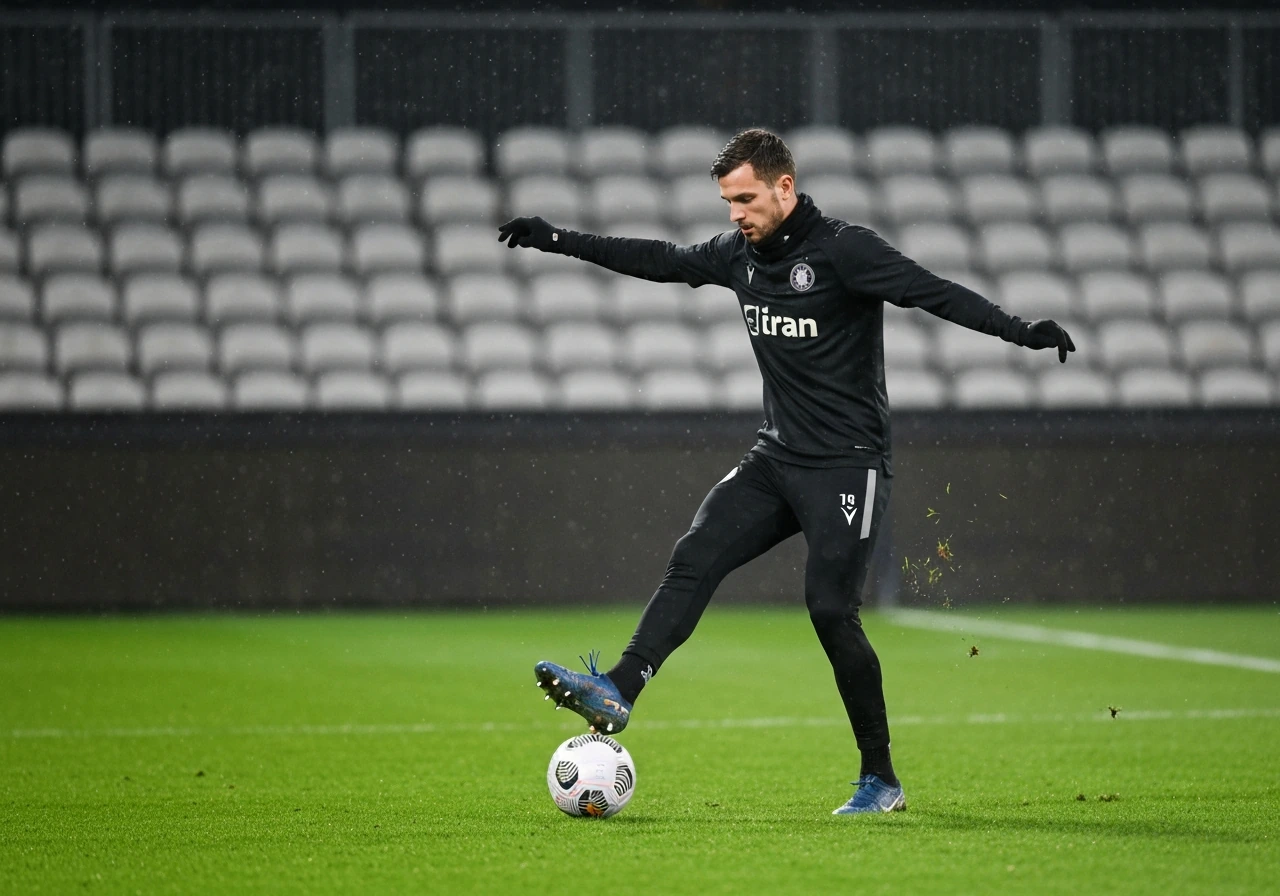
Ring has been a professional footballer since around 2010, starting at HJK Helsinki before a loan at Borussia Mönchengladbach (2012 to 2013) and a full transfer to Kaiserslautern. His career arc moved upward in earning potential when he crossed to MLS. NYCFC acquired him from Kaiserslautern, and he established himself as one of the better defensive midfielders in the league. Being designated as a DP at Austin FC suggests his salary there was well above the standard MLS player threshold, which is typically around $500,000 to $700,000 or more annually for that designation. Eight years in MLS at that level adds up significantly.
Endorsements and sponsorships

Ring's Transfermarkt profile lists Adidas as his kit outfitter, but that almost certainly reflects his club's kit deal rather than a personal endorsement contract. There is an athlete profile for him on OpenSponsorship, which is a marketplace where athletes list themselves for brand partnerships, but the presence of a listing does not confirm any active deal. No personal sponsorship agreement has been disclosed publicly. Given his profile, particularly his MLS years and return to Finland as a prominent captain, some low-level brand activity is plausible, but it would be misleading to build a large endorsement figure into the estimate without confirmation.
International career considerations
Ring represented Finland internationally but announced his retirement from international football in September 2018. National team appearances can carry modest match fees and bonuses, but those figures are small relative to club earnings. His early retirement from international duty means that income stream ended well before his peak MLS earning years concluded.
Investments and other ventures
There is no publicly available information confirming real estate holdings, business investments, or other ventures in Ring's name. Many professional footballers, particularly those with MLS experience, do invest in property or small businesses, but without confirmed public records it would be speculation to include those as line items. The estimate treats his net worth as primarily career-earned and saved.
How net worth estimates are put together (and why they differ)
Net worth is a simple concept: total assets minus total liabilities. The hard part is that almost none of the inputs are publicly confirmed for most athletes. Salary databases like Capology and FootyStats publish Veikkausliiga wage benchmarks, and sites like SalarySport produce individual profiles, but these are all estimates built from league data and publicly reported contract details rather than primary financial disclosures. Here is the basic methodology behind any credible estimate:
- Identify every club and approximate salary level for each stint using transfer reports, league wage data, and any publicly reported contract figures
- Sum gross career earnings across all contracts, using conservative and aggressive assumptions to build a range
- Apply a tax estimate for each jurisdiction (Finland, Germany, and the US all have different rates, and MLS income would have been subject to US federal and state taxes)
- Subtract estimated living expenses across the career, which for a professional athlete living in US cities like New York and Austin will be meaningful
- Add any confirmed or strongly evidenced secondary income (endorsements, business stakes, appearance fees)
- Acknowledge that the resulting figure is an estimate, not a verified balance sheet
Different websites produce wildly different figures because they make different assumptions at each step. Some ignore taxes entirely, which inflates numbers significantly. Others double-count endorsement income or use outdated contract data. A site that says Ring is worth $6 million and another that says $1 million are probably both using poor methodology rather than one being right and the other wrong. The honest answer is a range, and transparency about the inputs matters more than a precise single number.
How his wealth has shifted over his career
| Period | Club / Context | Estimated Earnings Level | Key Milestone |
|---|---|---|---|
| 2010–2013 | HJK Helsinki | Low (Finnish league wages) | Early professional career; limited savings potential |
| 2012–2013 | Borussia Mönchengladbach (loan) | Low-moderate (Bundesliga reserve wages) | European exposure but loan terms limit earning upside |
| 2013–2017 | 1. FC Kaiserslautern | Moderate (German 2. Bundesliga range) | 4 years of stable European professional income |
| 2017–2020 | New York City FC (MLS) | High (Designated Player salary range) | Biggest earning window starts; DP status confirmed |
| 2018 | International retirement | No change (minor) | Loss of international match fees going forward |
| 2021–2024 | Austin FC (MLS) | High (Designated Player) | Continued DP earnings through MLS expansion era |
| Feb 2025–Dec 2026 | HJK Helsinki (return) | Lower (Veikkausliiga top wages) | Captaincy role; reduced salary but stable contract through 2026 |
The wealth accumulation curve here is fairly clear. The German years built a solid professional base. The MLS years, particularly the Designated Player contracts at NYCFC and Austin FC covering 2017 to 2024, represent roughly seven to eight years of elevated earnings that likely account for the majority of his current net worth. The return to HJK in 2025 brought a pay cut in raw terms but also the stability of a two-year deal and a leadership role in European competition.
How to verify the numbers yourself today

If you want to check or update this estimate, here are the most useful sources to go to directly, and what to watch for:
- HJK Helsinki official website and press releases: The February 5, 2025 signing announcement and the 2026 captaincy announcement are primary sources that confirm his current club status, contract length, and role. Cross-check any net worth claim against these for basic identity verification.
- Transfermarkt profile for Alexander Ring: Confirms contract expiry (December 31, 2026), club history, and market value history. Market value is not the same as salary, but shifts in it track career trajectory usefully.
- UEFA.com squad listings: The Conference League 2025/26 squad page for HJK confirms his active competitive participation, which is relevant if you are trying to estimate bonus or appearance-fee income.
- MLS salary disclosures: The MLS Players Association has historically published annual salary guides. Check whether Ring's NYCFC or Austin FC salaries were ever listed in those disclosures, which would provide a confirmed figure for those years.
- Capology and FootyStats for Veikkausliiga wage benchmarks: These give league-level context for what HJK's top earners make, which helps bound the current contract estimate.
- Finnish tax records: Finland publishes annual income tax data for high earners (those earning over approximately €100,000 per year). Ring may have appeared in those records during his return season. This is a legitimate public record check.
Red flags to watch for
- Any site claiming a single precise figure (for example, exactly $3,450,000) without explaining the methodology is almost certainly making it up or copying an old estimate
- Net worth figures that ignore taxes and location of earnings will be inflated by 30 to 50 percent in many cases
- Confusing Alexander Ring (Finnish footballer) with Erik Ring (Swedish, born 2002), the Alex Ring at Piper Sandler, or the UK charity trustee is a real risk on lesser-known reference sites; always check birthdate and nationality
- Endorsement income listed without a named brand or publicly reported deal is speculative padding
- Sites that have not updated since before the February 2025 HJK signing will be missing his current contract context entirely
The bottom line is that Alexander Ring, the Finnish midfielder and HJK Helsinki captain, has built a net worth most credibly estimated between $2 million and $4 million through a long professional career with its peak earning years in MLS. If you are specifically researching Alexander Rinke net worth, the same $2 million to $4 million range is the commonly cited estimate for the Finnish player most people mean by that name. If you are also researching Matthieu Ricard, you can compare how net worth figures are estimated there as well matthieu ricard net worth. If you are specifically trying to confirm the latest figures around Alex Rinke net worth, look for updated salary details, contract changes, and any verified disclosures. If you are specifically searching for Alexandre Ricard net worth, note that it refers to a different person and not the Finnish footballer discussed in this article. That range could be higher if his Designated Player contracts were at the top end of the DP scale, or lower if living costs and taxes in New York and Austin were substantial, which they likely were. The current HJK contract through late 2026 keeps him earning at a professional level, but at a reduced rate compared to his MLS years. Transfermarkt lists Alexander Ring’s current club as HJK Helsinki and shows a contract expiring 31/12/2026 blank" rel="noopener noreferrer">current HJK contract through late 2026. Any major financial update worth tracking would be a post-2026 contract move, a confirmed major sponsorship, or a disclosed business investment.
FAQ
How can I tell whether a website is estimating the real Alexander Ring net worth or a different person with a similar name?
Start by matching identity details before trusting the number, confirm the Finnish midfielder born April 9, 1991, captain of HJK Helsinki, and his HJK contract window through Dec 31, 2026. If the page mentions a Swedish player like Lincoln City, a US finance executive, or a UK charity trustee, treat the net worth figure as unrelated.
Why do some sources list Alexander Ring net worth outside the $2 million to $4 million range?
Most outliers come from methodological choices like ignoring taxes, using old contract terms after an update, or inflating endorsement income without confirmation. A quick check is to see whether the site cites specific contract sources or just states a headline number without assumptions.
Does his MLS Designated Player status guarantee his net worth should be at the higher end of the range?
Not necessarily. DP earnings are higher than typical MLS salaries, but the final outcome depends on contract exact terms, time actually spent on DP-designated deals, tax residency, and how much is saved versus spent on taxes, lifestyle, agents, and relocation costs.
Can I verify his exact income using publicly available salary databases?
You can often verify salary benchmarks and compare them to league norms, but exact earnings are usually not fully public. Look for whether a database provides year-by-year contract estimates and whether it updates after contract extensions, transfers, or role changes like returning to a home-league captaincy.
Should I include sponsorship or brand partnerships in his net worth estimate?
Only if there is credible evidence of an active deal. The article notes that some listings, like marketplace profiles, do not prove a contract. A practical approach is to treat endorsements as small or unknown unless there is a verifiable announcement, consistent reporting, or disclosed terms.
How do taxes and living costs affect net worth estimates for a player like Ring across different countries?
They can move the result substantially because league pay is not the same as take-home pay. Estimates that convert gross salary to net without country-specific tax assumptions or relocation costs tend to overshoot, especially for years spent in high-tax jurisdictions.
What is the most useful way to update his net worth after his HJK contract period ends?
Track post-2026 contract outcomes. A move to a new league, a change in role that affects pay, or a confirmed major sponsorship would be stronger signals of a net worth change than social media activity or kit sponsorship mentions.
Could real estate, investments, or business ventures be missing from online estimates, and does that make the range unreliable?
Yes, those assets may be missing, but you should not assume them without confirmation. The article’s range already reflects a conservative approach that treats net worth primarily as saved career earnings, so hidden assets would be upside risk, not justification for higher numbers without evidence.
Why is “net worth” often inconsistent with “salary” when people compare numbers online?
Net worth includes accumulated assets minus liabilities, so a player can have a high past salary but a lower net worth if spending, taxes, debt, or timing of investments differs. Conversely, consistent saving during peak earnings can produce a higher net worth than a casual salary-only calculation would suggest.